La Bonne Mer
Return to Sacred Sea home page
Version française clickez ICI
Sacred Sea - Artist interview
“LOVE LETTER” by Marie Goldflake in collaboration with Mohammed A. Nateel
Love Letter is a collaboration between singer-songwriter Marie Goldflake and photographer Mohammed A. Nateel. Created between the western coast of Brittany and Gaza, the project brings together music, photography, poetry, memory, and friendship across distance and war.
In this conversation, the two artists reflect on their personal journeys, the role of art in times of violence and displacement, and how a simple exchange of messages grew into a work that seeks to bridge two shores and affirm our shared humanity.
Marie Goldflake is a singer-songwriter living in Bretagne, France, creating music devoted to peace, memory, and human connection. With a background in journalism and formative travels through India, where she met Tibetan people living in exile, her work became deeply intertwined with raising awareness about oppression and genocide. Inspired by life experiences, encounters, and her love of music, she writes songs that aim to illuminate the darkness of our world while nurturing empathy, equality, and hope.
Marie Goldflake
Can you introduce yourself and your artistic journey? How did music become your way of engaging with questions of peace, justice, and human connection?
Marie Goldflake: I live by the ocean, on the western coast of France, with my two children and my husband, who is also a musician. I've been writing songs since I was a child. For a long time I thought my voice wasn't good enough, so I hid. Yet music was always there. At sixteen I joined a choir despite knowing nothing about music theory, and a few months later I was singing Mozart's Requiem in Paris.
Alongside music, I always felt drawn toward justice. I wanted to heal the world somehow—first as a veterinarian, then a lawyer, then a journalist in conflict zones. Encounters with Tibetan communities in exile and the teachings of the Dalai Lama profoundly shaped me. They taught me that peace begins in the heart. Over time, my search for truth, justice, and human dignity became inseparable from my music.
Love Letter was created between Bretagne and Gaza, between two shores facing different realities. How did these distant landscapes begin to speak to one another?
Marie: On February 14th, 2024, I sent Mohammed a message to tell him how much I admired his work. At the time, I spent much of my life trying to understand what was happening in Gaza beyond the narratives presented in the news.
As our conversations deepened, I stopped seeing distance. The sea was the same sea. Our shores felt connected. I found myself living between two realities at once, unable to continue life as if what I was witnessing through my friends in Gaza existed somewhere far away.
Why did the image of the letter become so central to this project?
Marie: Because sending messages to friends trapped inside Gaza became central to my life.
Letters cannot easily reach Gaza. So our letters became digital—messages, voice notes, conversations. Through those exchanges, you enter another person's daily reality. You hear the drones, the bombing, the fear, the waiting. Mohammed shared his life with extraordinary generosity.
A letter became a symbol of connection, intimacy, and care across impossible distances.
The title Love Letter speaks of love, yet it emerges from a context marked by immense loss. What does love mean to you in this work?
Marie: Love is what the oppressor tries to kill. Tries to steal. It is Resistance. It is absolutely terrifying to love someone in Gaza. His Life can be taken at any moment. The whole world want to forget about Gaza because it is too dangerous. Too dangerous to love. Too hard to face our own rubble, our own responsability. (Too complicated to work with. To make projects.) The suffering is so intense that very few people are ready to welcome it in their Life. With care, humility, Space and gentleness. Israel regime wants to isolate completely the people of Gaza so they can make their crimes as they need. Love is bond. Love is light. Love is God.
Has this project changed your understanding of compassion?
Marie: Palestine changed my understanding of compassion.
I learned that compassion is not only feeling. Compassion requires action. It asks us to stand up, to listen, to support others while remaining grounded in ourselves. It is a practice of courage and honesty.
Mohammed A. Nateel
Can you tell us a little about your journey as a photographer? What first drew you to image-making?
Mohammed Nateel: My journey as a photographer began in childhood, when my father first allowed me to take a picture using an old film camera. Photography was part of documenting our family life. It remained a hobby for many years, but studies and life’s responsibilities gradually pulled me away from it. I studied Business Administration, and my first job was as a Training Unit Coordinator in a humanitarian organization. Later, I worked for many years in child protection programs and projects.
During that time, photography was mainly a form of documentation and something deeply personal. My brother, Youssef, was working on the film Gaza Graph, which documents the lives of photographers in Gaza and traces the origins of photography as a profession and an art form in the city. The film was both a historical narrative and a research project, beginning with Kegham, the Armenian photographer who came to Palestine.
While Youssef was producing the film, he invited me to join the crew. I noticed there was a camera that no one was using, so I started photographing locations, the crew, and capturing spontaneous video footage. Kegham’s story had a profound impact on me. I kept asking Youssef to let me join future shoots, and little by little, through experimentation and practice, I learned a great deal.
Eventually, I decided to leave my job and dedicate myself fully to photography and filmmaking. I consider Kegham my first inspiration. Living his story through my brother’s film and learning how he documented Gaza and its people planted something deep inside me. It inspired me to document my city instinctively, and over time, the camera became part of who I am.
Before becoming a photojournalist, what was your relationship with photography?
Mohammed: My photography focused on everyday life, the beauty of the city, personal stories, music groups, the countryside surrounding the city, and the coastline. Photojournalism entered my life much later. In many ways, I was pushed into it because of the shortage of photographers during a critical period of the war.
Even within photojournalism, I was always drawn to human stories rather than simply reporting news. I stayed close to people, just as I had once stayed close to the beauty of the city before the war.
What allows you to express yourself through the camera that words cannot?
Mohammed: The camera is my voice. Photography is my language. When I want to speak, I take pictures. To me, an image is a voice, a feeling, and an experience. My voice during the war was photography. My voice before the war was photography. And here in London, my voice is still photography.
Is there a photograph you never took but that still lives inside you?
Mohammed: I see every moment as a frame, as a photograph. The image I wish I had taken is of our home in northern Gaza before we were displaced during the first days of the war. When I eventually returned, I photographed it as rubble.
Your photographs often feel deeply human rather than simply documentary. What are you looking for when you frame an image?
Mohammed: I am very sensitive to people’s emotions. I may appear composed on the outside, but internally I deeply feel both people’s joy and their sorrow. For a brief moment, I become part of the scene before me and live within it. The camera becomes an extension of my eyes. Everything I feel and sense in that moment becomes part of the image.
What role does emotion play in your work?
Mohammed: A photographer is emotion. A photographer is an artist, and artists often experience emotions more intensely. When I left Gaza, I did not leave alone—I carried within me every story I had documented. For an entire year, my mission was to record and witness these stories every day.
The hardest part was continuing to live while carrying all these stories inside me. It is difficult to forget because I am human. Today, I am trying to build a new life and create new memories strong enough to coexist with the emotional weight of the past.
Do you think photographs can carry memory in the same way letters do?
Mohammed: One photograph is worth a million letters. Photography is stronger and more truthful. It is both an archive and a memory.
What makes a photograph stay with us long after we have seen it?
Mohammed: Because a photograph is a story, and stories endure. A photograph is made up of many elements, and when those elements come together successfully, the image becomes timeless.
Your exhibition explores similarities between London and Gaza. What unexpected connections did you discover between these two places?
Mohammed: The exhibition evolved over time. For me, it became an ongoing attempt to heal from the traumatic experience I lived through during the genocide. As a photographer focused on human stories, I needed a space where I could process and recover from that experience.
Originally, the exhibition was meant to document my journey—from Gaza before the war, through the war itself, and finally to London. But memory proved stronger than a chronological narrative. Trauma proved stronger than historical storytelling.
As I photographed London, scenes from Gaza constantly resurfaced in my mind. The movement of people and the crowded tourist streets reminded me of people searching for food during the famine in Gaza. Some images brought back beautiful memories; others recalled painful moments I had lived through in my city.
What do these two seemingly different cities reveal about one another? What conversations do you hope emerge from placing them side by side?
Mohammed: Simply put, time is shared. While some cities live in peace, others endure war and conflict. While one person goes to bed full, another goes to sleep hungry.
How did you first encounter Marie’s music and her idea for Love Letter?
Mohammed: I first became aware of Marie’s music during the war. She would regularly check in on me and ask how I was doing. I often describe Marie as a guardian angel who kept reaching out to me, day after day, throughout that period.
When she told me about Love Letter, I felt as though someone was finally going to express what I had been carrying inside.
How did it feel to see your photographs woven together with images from Brittany?
Mohammed: The work felt complete through Marie’s voice and the imagery. It made me feel that Gaza was not alone. It felt as though, on the opposite shore from Gaza, there was a world waiting to build a bridge and reach out to my city—just as Marie had reached out to me.
What emotions did you experience when you first saw the finished work?
Mohammed: Honestly, sadness at first. It brought me back to Gaza and to the brutality of the genocide.
The film suggests that distance can collapse in the face of human feeling. Does that resonate with your experience?
Mohammed: Absolutely. As I said, Marie was my guardian angel during the war.
Marie describes the project as “the love letter that Gazans never received.” What does the idea of a letter evoke for you?
Mohammed: People in Gaza need to feel the same care and compassion that Marie showed me during the war and through this project. They need to feel that someone is holding them, standing beside them, and reminding them that they are not alone. We experienced a level of abandonment that no people should ever have to endure, and I would not wish it on anyone.
What role do you think art can play in times of displacement and uncertainty?
Mohammed: Art is a lifeline. It is a temporary remedy that helps us survive moments of trauma.
What gives you hope today?
Mohammed: What gives me hope today is that I am living in a different world. The experience is not easy—it is filled with loneliness and has not been what I expected—but I am trying to build my own world here, and that helps me move forward from what I experienced during the genocide.
What dreams are guiding you now as an artist?
Mohammed: I am living my experience as an artist and trying to express what is inside me beyond archival observation. I am currently working on more experimental photographic projects.
What kinds of stories do you hope to tell in your future work?
Mohammed: They will be more about emotions than stories.
If one of your photographs could step out of its frame and speak directly to the world, what would it say?
Mohammed: It would say: “Freedom.”
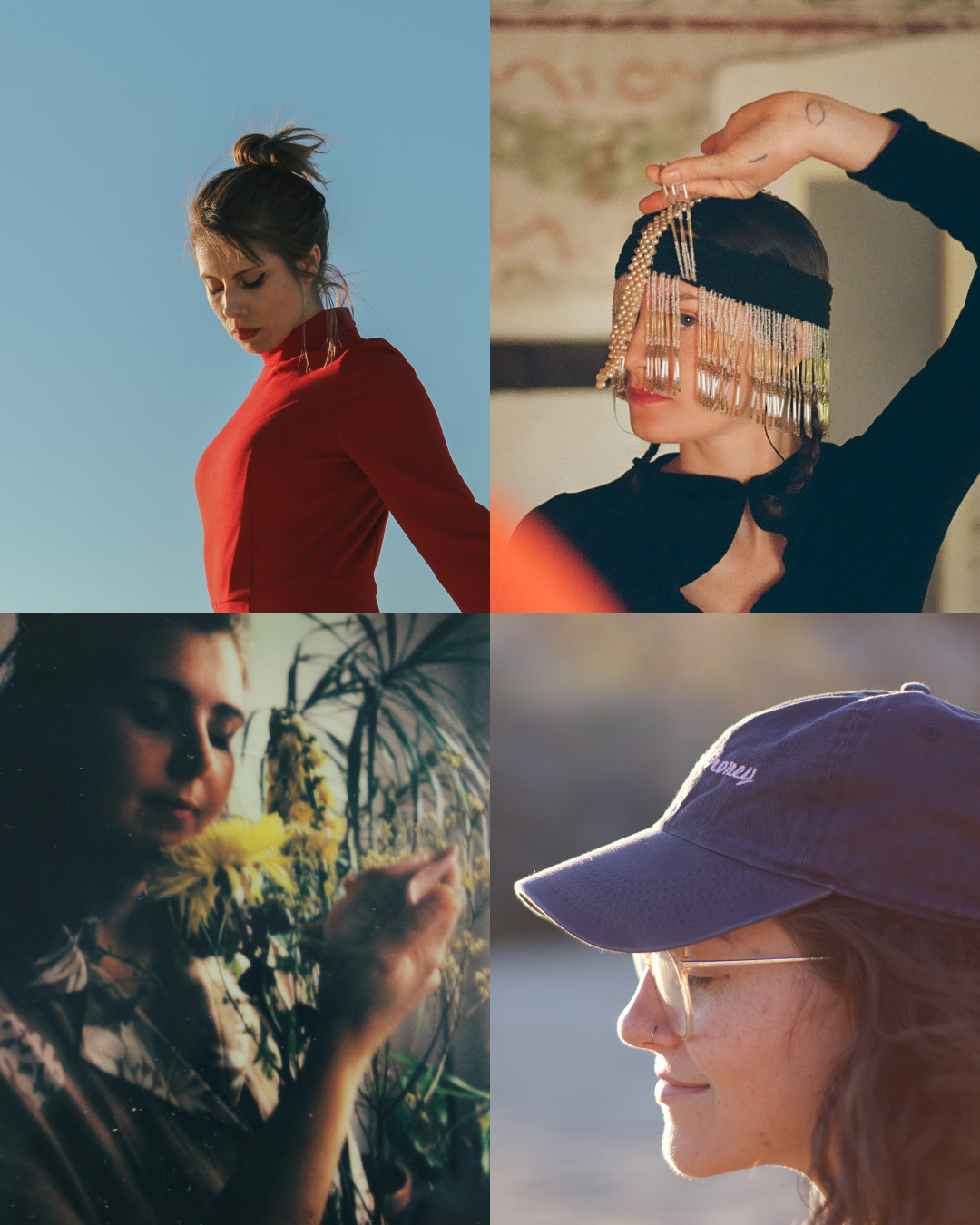
About the artists: