La Bonne Mer
Return to Sacred Sea home page
Version française clickez ICI
Sacred Sea - Artist interview
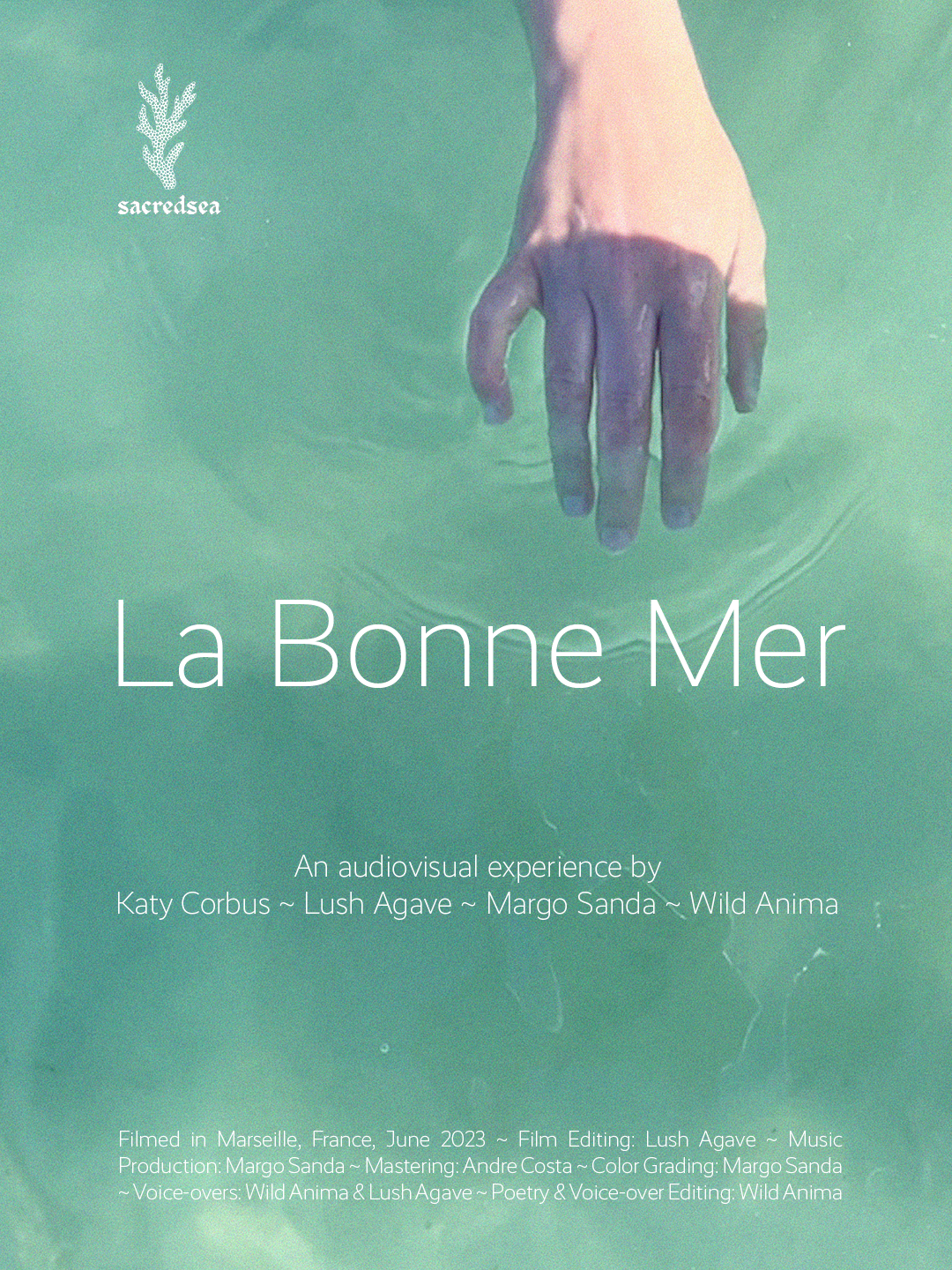
“LA BONNE MER” an audiovisual experience by Lush Agave, Katy Corbus, Margo Sanda and Wild Anima
La Bonne Mer is the collaborative mixed media project of artists Lush Agave, Wild Anima, Margo Sanda and Katy Corbus. Born out of meditative vocal improvisation and free play in nature, La Bonne Mer finds these musicians and visual artists following the call of Mother Earth herself to deconstruct patriarchal notions of holiness. Using their voices to channel the texture and spirit of the elements, their bodies in space to try on our human coexistence with them, and audiovisual composition to envelop our senses, they create a captivating multidimensional experience.
Artist statement
“La Bonne Mer is a project that hopes to take many life forms; its current iteration exists in short music film format. It begs us to also be expressed in a live, immersive environment, where the artists are present with their audience, interacting through dance and movement, boldly incorporating elements and artifacts, creating a living ecosystem. We want to bring our voices to the space in real time, freshly orchestrating what we channel through play, as our guests take in the soundscape of our field recordings and projected visuals reconfigure the walls.
We are all of our Mother, our planet. Many of the customs contrived by our species obfuscate this truth, and draw us into a different narrative, where our bodies are not our own, nor of the Earth, but part of a gamified system and allowed to be owned, tamed, conquered. Only then will they reach their holy potential. But no - our art begs us to subvert this story, to find union with the natural world we already belong to, to heal ourselves from this subjugation. We have the power to heal ourselves and each other through connection to our source and force of life. In the loving arms of our Mother Nature we will be bathed, baptized in her elemental wisdom, brought back to already, always holy life.”
released April 17th, 2026, first premiered at CalArts, Los Angeles, January 2026
How would you describe yourselves as an art group? How did you all meet?
Alisha (Lush Agave): Alex (Wild Anima) and I met playing a show together in Orlando, Florida in 2017, when she was touring from France. Our creative connection felt like it immediately exploded, and the next thing you know, we were doing a residency together in Iceland. Looking back, we’ve now met up in 4 different countries, a different city each time! I later met Margo through her, and we’ve all been collaborating ever since. It’s been an incredible and unique experience to consistently be creating together across an ocean over so many years. With this latest project, Katy became involved when we all met together in Marseille in 2023.
Katy Corbus: I feel so fortunate to have gained Alex and Margo as friends and collaborators through my partner Alisha. This sustained, long-time artistic connection and continued exploration is so inspiring and magical to me, and I have learned a lot from all of them even through this one trip and process.
Margo Sanda: I met Alex at the Popkultur Festival in Berlin in 2019, where we were both participating in Nachwuchs, a workshop series for emerging artists. Amid the multitude of talks, concerts, and new faces, we felt an immediate connection. Not long after, we began collaborating on music and video editing. A few months later, we flew to LA, met Alisha, and our creative partnership continued to grow. It wasn’t until Marseille that we all met together for the first time with Katy, and that’s when La Bonne Mer came to life.
Alex (Wild Anima): As described above, we all met through meaningful connections following our hearts by making art and exploring themes of inner ecology, redefining feminism or the act of performing in relation to creating immersive experiences through various artforms.
How did LA BONNE MER first come into existence? Was it sparked by a place, a story, or a shared intuition?
Alisha: Margo (from Italy), Katy, and I (from the US) travelled to Marseille in 2023 to meet with Alex who had just moved there. We didn’t have anything specific in mind, and wanted to remain open to see what creative prompts presented themselves during our time together. Thus far, our collaborative works have been usually inspired by whatever place we are at together. Because we were all in an exploration and relaxation mindset, we swam in the sea almost every day. I also love churches, so we visited the Notre-Dame de la Garde known to locals as la Bonne Mère. These two locations became the central themes of the film.
Margo: The vibrance, warmth, and gentle breeze of Marseille sparked a profound sense of inspiration in us, while also fostering a reconnection with natural and spiritual elements, something I believe we each experienced in both unique and shared ways.
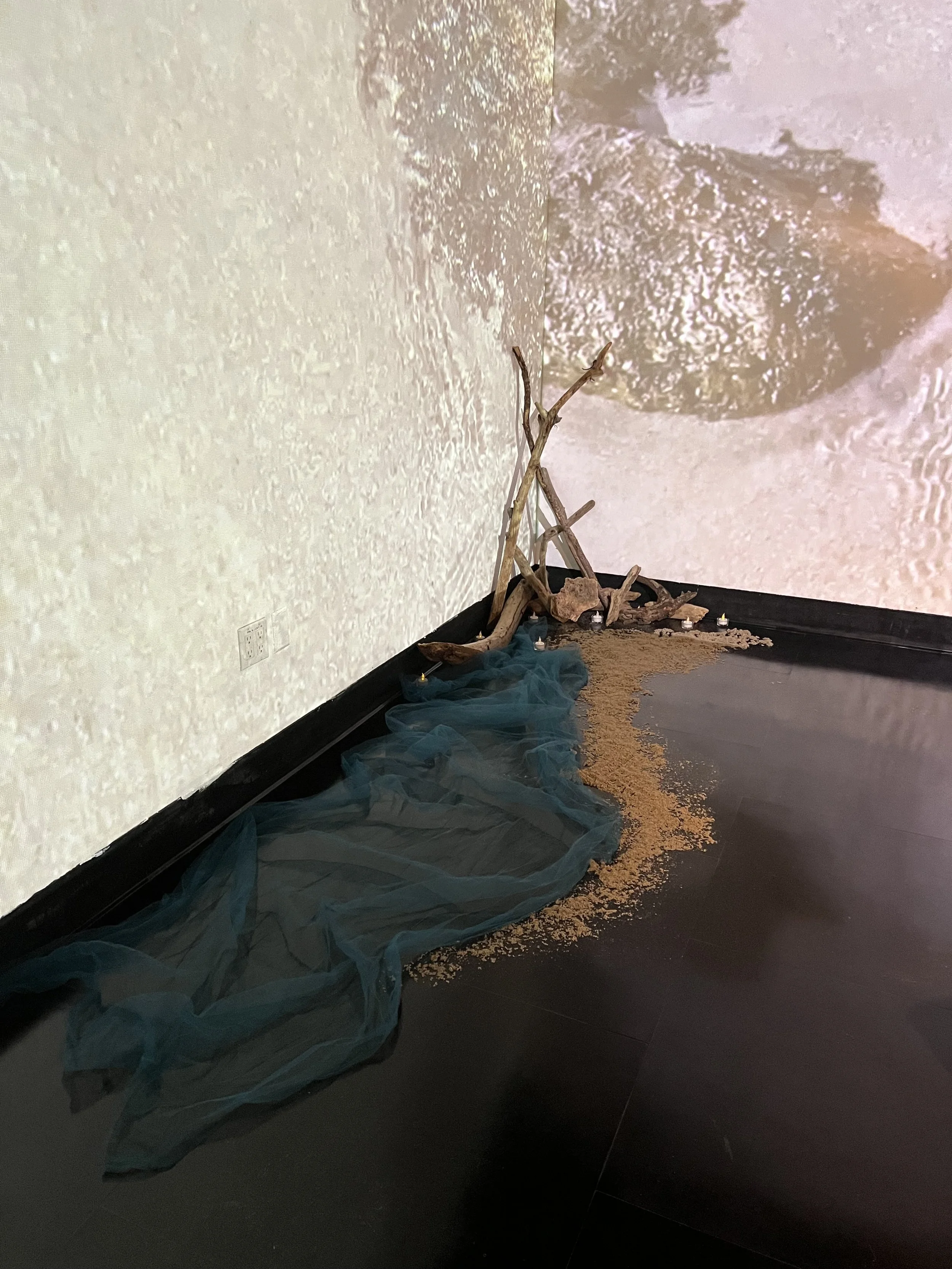
La Bonne Mer installation at the Wave Cave, CalArts, Los Angeles
What was the creative process behind creating this film? Where did it take shape?
Alisha: We had this beautiful day swimming at île de Ratonneu, and I just wanted to film how gorgeous the water looked - the reflections of light on the turquoise water, the texture of the sand. I think Alex had mentioned at some point that our hair looked like seaweed in the water, so we felt a spontaneous direction to explore movement, centralizing it, and us all floating in the water. I believe we also sang improvising together later that evening. We were also laughing a lot at my terrible French (after I stepped on someone’s toe by accident and blurted out, “s'il vous plaît!”), and how it was hard for me to distinguish certain words, for example, “mer” (sea) and “mère” (mother), as we saw Mother Mary represented at the Notre-Dame de la Garde. We realized the connection with the words could be explored with the footage we had recorded.
The title itself carries both tenderness and mythology. What does “La Bonne Mer” mean to each of you?
Alisha: Water is life. Each of us grows into being within an amniotic sea, carried in a body that is sustained by water. The correspondence to the divine mother archetype presents a beautiful perspective in considering the holiness that water carries.
Margo: It’s the feeling of a presence, tender, forgiving, always with you, gently caressing you through both the good and the bad. Warm and nurturing, it embodies a deep connection between the heart and the vastness of love… and the sea
Alex: I used to come to Marseille and its surrounding region very often as a child. La Bonne Mère — the church Notre-Dame-de-la-Garde — always felt like a dreamlike place, something half-remembered from my early years.
Its name is deeply embedded in local language. “Oh Bonne Mère!” people say, as an expression of astonishment — much like “oh my God” in English. It’s spoken with a strong southern accent, almost Italian in tone. For any French person, hearing it instantly evokes Marseille and carries a warm, nostalgic feeling, as if echoing an older time. It brings to mind the childhood memories found in the works of Marcel Pagnol — the garrigue, the wild Provençal landscapes, and the simplicity of youth.
The wordplay Bonne Mer carries a similar sense of familiarity, nostalgia, and even humor. It’s a name often found in restaurants and fish shops. I love that this title emerged from the girls, who weren’t necessarily familiar with the place or its cultural nuances.
To me, it immediately evokes the Mediterranean — the “good sea.” The sea of my childhood in Greece, which I now reconnect with while living in my native France. The Mediterranean has always played a central role in my life: it is the stage of The Odyssey and so many ancient Greek myths, filled with stories of mermaids and sea creatures.
More recently, it has also come to resonate through its connection to Mary Magdalene, as well as through my own personal bond with whales and the element of water.
How did the installation in the Wave Cave transform the experience of the work?
Alisha: This was the first visual art installation I’ve ever done, and I’m so grateful to have been granted the space by California Institute of the Arts (CalArts). Since we were missing Alex and Margo being there with us in-person, I definitely had moments of grief or feeling anxious because I wanted to have their input more directly. But the physicality of putting this together added a deeper understanding of how I think we were all relating to the piece too. Katy and I went to the beach and (comedically) carried tubs of ocean water and sand, we foraged driftwood and shells, and received pieces for the altar from friends. It all felt very collaborative and immersive to be building with elements we were showcasing in the film.
Katy: Putting La Bonne Mer together for the Wave Cave was such a gift, and felt so natural despite Alisha and I not having much previous experience with installations in this format. We flowed through preparing and sharing it with so much joy. We chose the artifacts and sort of let them tell us where they wanted to be in the space: letting the driftwood settle into shapes that felt organic, twisting the seawater font until it was just right in the light, placing each shell on the mantle as they asked to be placed. It felt spiritual to work as we set it up, with the audio and video playing and incubating us. And to be in the space once it was finished I think felt that way for viewers, too, cozy and safe and secure. To take the piece and transform it into such an immersive, environmental experience gave it a whole new life and really strengthened its purpose for me too. I felt very emotional just being inside of it, and hope to carry that on for future sharing and hopefully more live iterations of the piece.
Margo: Watching from a distance the pictures and videos of Alisha and Katy assembling the installation felt surreal. To see something we had all created together take on a new form on the other side of the planet, finding its place in physical, three-dimensional space was magical and powerful. It was like letting go of a work that had been so close to us, allowing it to evolve independently, and witnessing it become so beautiful that it fills you with profound humility and gratitude. A great reminder of the power of collaboration.
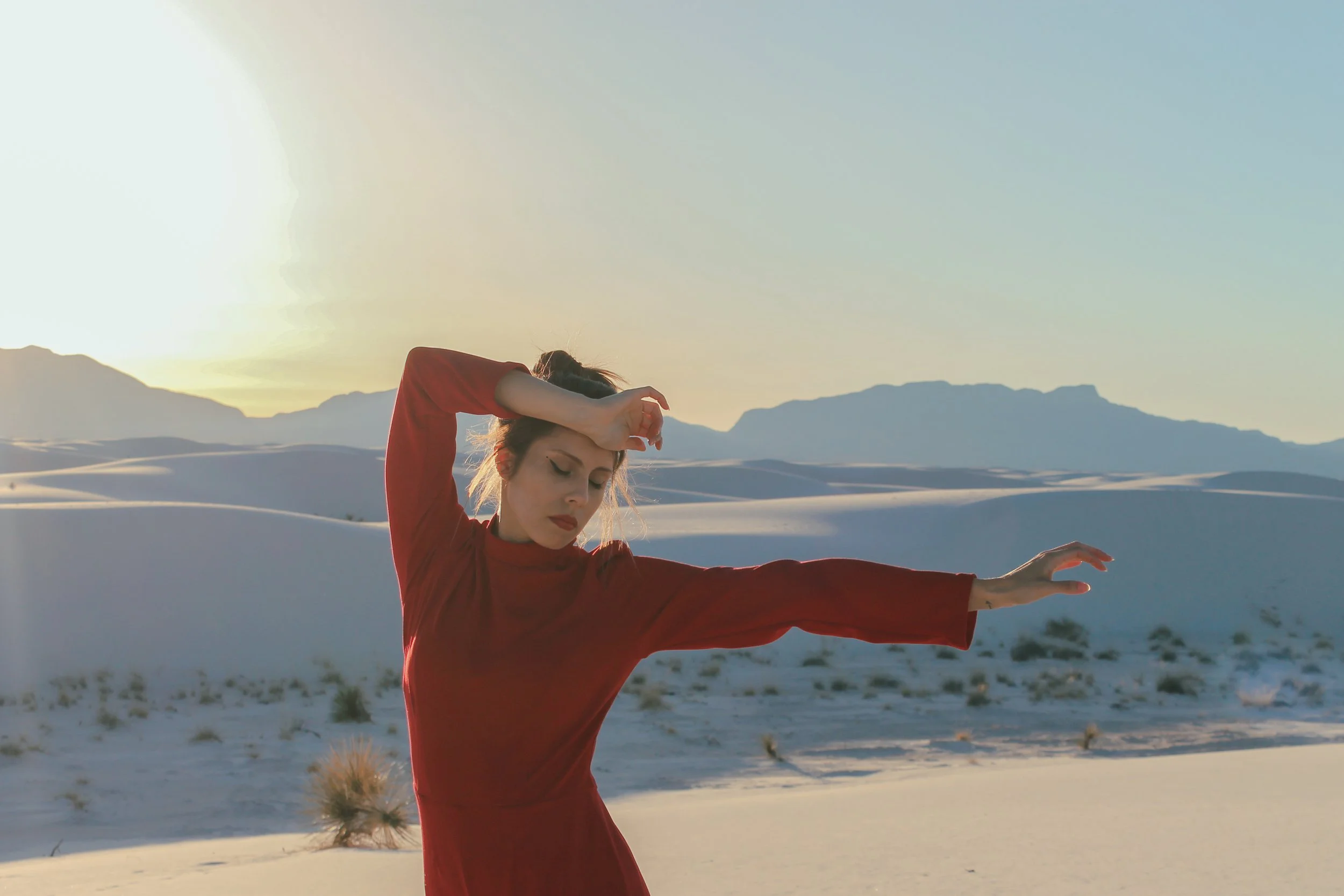
Lush Agave
What was it like to share the piece in a space that already carries such a strong natural and acoustic presence?
Katy: Definitely! This space is home for lots of rotating installations and so versatile, and even though it started off as a very simple, white-walled room, it transformed with us as we began setting up so easily, and took on a new presence, truly like a womb.
Alisha: Yes! I think we really tuned into how the Wave Cave could best represent every element, feel in sync with the piece, and with anyone who entered.
What is your personal relationship to water and to the sea?
Katy: I love water and swimming, and become a kid at the beach. I love to run and jump in the waves and get all salty and make myself out of breath from playing so hard. Lately I’ve been trying to tune in when something makes me feel this way and recognize that those things that connect us to our most youthful, carefree, joyful selves are the whole point, and the whole force that keeps life going. Water often brings that out for me, sometimes more subtly, sometimes very wild.
Alisha: I recently heard an interview with Erica Gies about her book, Water Always Wins: Thriving in an age of drought and deluge. She mentioned how water has agency, echoing indigenous beliefs of reciprocity. It has filled me with such joy and awe to truly see and respect water this way. The sea itself holds such mystery and magic as well, as do our wells of creativity.
Margo: I feel a constant need to have water nearby. Whether in a city or a village, I’m always drawn to lakes, streams, little rivers, or the sea. I need it, it’s like oxygen. The sea, in particular, feels like connection and infinity. It offers a horizon for dreams, hopes, and longings, and at the same time can be a tough teacher. It shows us that nothing ever stands still, that transformation happens all around us. It regenerates, its salt creating space to welcome new layers of our skin and selves.
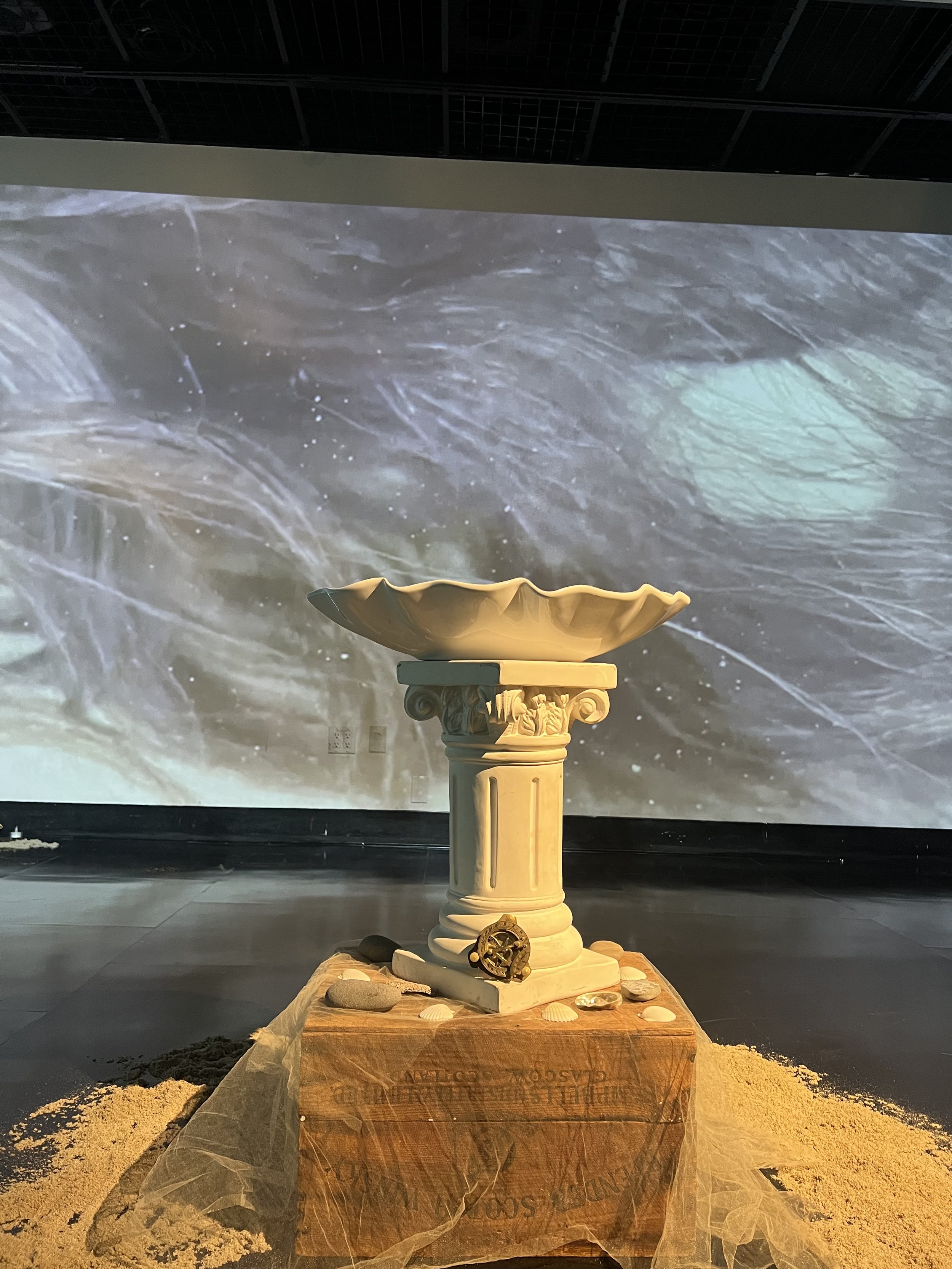
La Bonne Mer installation at the Wave Cave, CalArts, Los Angeles
Do you see water as a memory keeper, a mirror, a force, a mother?
Alisha: All of the above! I recently composed a piece inspired by a passage in TheTheory of Water by Indigenous author, Leanne Betasamosake Simpson. In it, she describes how her ancestors spoke to their ancestors through the sound of rushing water. She describes water as a portal, and in this way, it encompasses all of these things.
The project evokes the idea of the “mother.” How does motherhood — literal or symbolic — appear in your work?
Katy: I come from a two-mother family - mothering is at the core of all I have ever known and for that I am so grateful… I also lost one of my moms very suddenly as a child, and so have lived with mother-grief for most of my life. My art feels connected to motherhood in lots of ways; first, it always does feel like a birth of sorts to write and share anything new (music, writing, choreography). A lot of what I make - and even the general flavors of what I enjoy - is informed by the wide range of music and art and play that my moms introduced me to and cultivated within our family, and so creating in itself feels connected to them. I sometimes very literally write about my mothers too… I also very much hope to become a mother, and love to ruminate on how that evolution might affect my work, my art, my entire way of showing up and sharing.
What does it mean to “mother oneself” as an artist and as a woman?
Alisha: Reparenting myself in general has been a powerful mindset to try on, especially within my artistic practice. With my classical background in voice, I historically included a lot of judgement and negative self-talk as a motivator in creativity. It’s something I’ve been untangling for over a decade, and it can still be challenging at times. Instead, my focus has been to invite nurturing and nourishment, to how I create art, to myself as an artist, and to community.
Margo: It feels like the journey we are all moving toward in some way, learning to discover within ourselves the love, guidance, acceptance, and strength we once sought so desperately from outside sources.
Did working together as four women create a particular energy or form of care within the process?
Alisha: Our collaborations over the years have always centered on caring for one another. This often has meant taking time to tune-in to each other and see how the work unfolds without a sense of urgency.
Margo and I have both been in school, so we’ve had to take pauses when things got too chaotic. We are always talking about what feels inspiring and try to move toward that. Alex also has read tarot for us in our meetings, and I feel like this has been a lovely way to spur discussions about what we need, what’s motivating us, and how to further define how we’re feeling in that moment in our process.
Margo: It’s beautiful just to keep our connection alive and to reconnect once in a while on video calls, sharing life events, thoughts, and good or more challenging moments, even if we’re not part of each other’s daily lives.
When this happens with people I respect and am inspired by, I always feel so grateful, because it seems like a gift in itself, you know, just the connection. Then I think the work that comes from it is really just an outcome of this connection :) The energy between us feels full of deep respect and admiration for each other’s practices and care.
Alex: I would say that we were five women working together — if we count Marseille itself as one of us.
There is a particular feeling in this place, almost as if it were a living entity. I’ve spoken about this with others, and it’s not something immediately obvious. Marseille has its own way of letting people in — if I may say, of receiving them. There is a kind of magic here, something I would describe as another dimension, one that can only be accessed through the heart.
It is a city of many paradoxes, a host of a lot of poverty and corruption. This has been a long caricatural image given to this place for many decades. And yet, for those who are willing to look — or rather, to feel — more deeply, another reality reveals itself. A place of mysticism, of ancient knowledge, of deep spirituality.
The sea feels like the primary teacher here — almost like an abbess presiding over the territory. And the people carry this transmission, whether consciously or not. It moves through the simplest gestures of daily life: buying bread, sitting in the sun on terraces, gathering at night, watching football, shouting together in joy. There is something communal, almost ritualistic, in these shared moments.
I believe this presence found its way into our work. We became listeners to what Marseille had to offer — not through any deliberate method, but through being together, through joy, through presence, after time spent apart.
Perhaps Marseille itself moved through us, shaping the work from within, giving form to something that was already there, waiting.
What we experienced was something deeply human — and quietly magical.
The title and imagery evoke echoes of devotion — perhaps even the figure of the Virgin Mary. Was that influence intentional?
Alisha: Yes, the Virgin Mary is a fascinating figure to me. Especially when visiting the Notre-Dame de la Garde, I was reflecting a lot on how she is perceived within patriarchal institutions and who she is outside of them.
Within these institutions, she is adored as a vessel, and upheld because she is a symbol of purity. Devotion feels conditional, and revolves around seeing her only in these ways. This perspective contains a notion of extractivism, and echoes how the colonial mindset treats the earth. I wanted to reframe how we practice devotion, to Mary, to women, and to the earth.
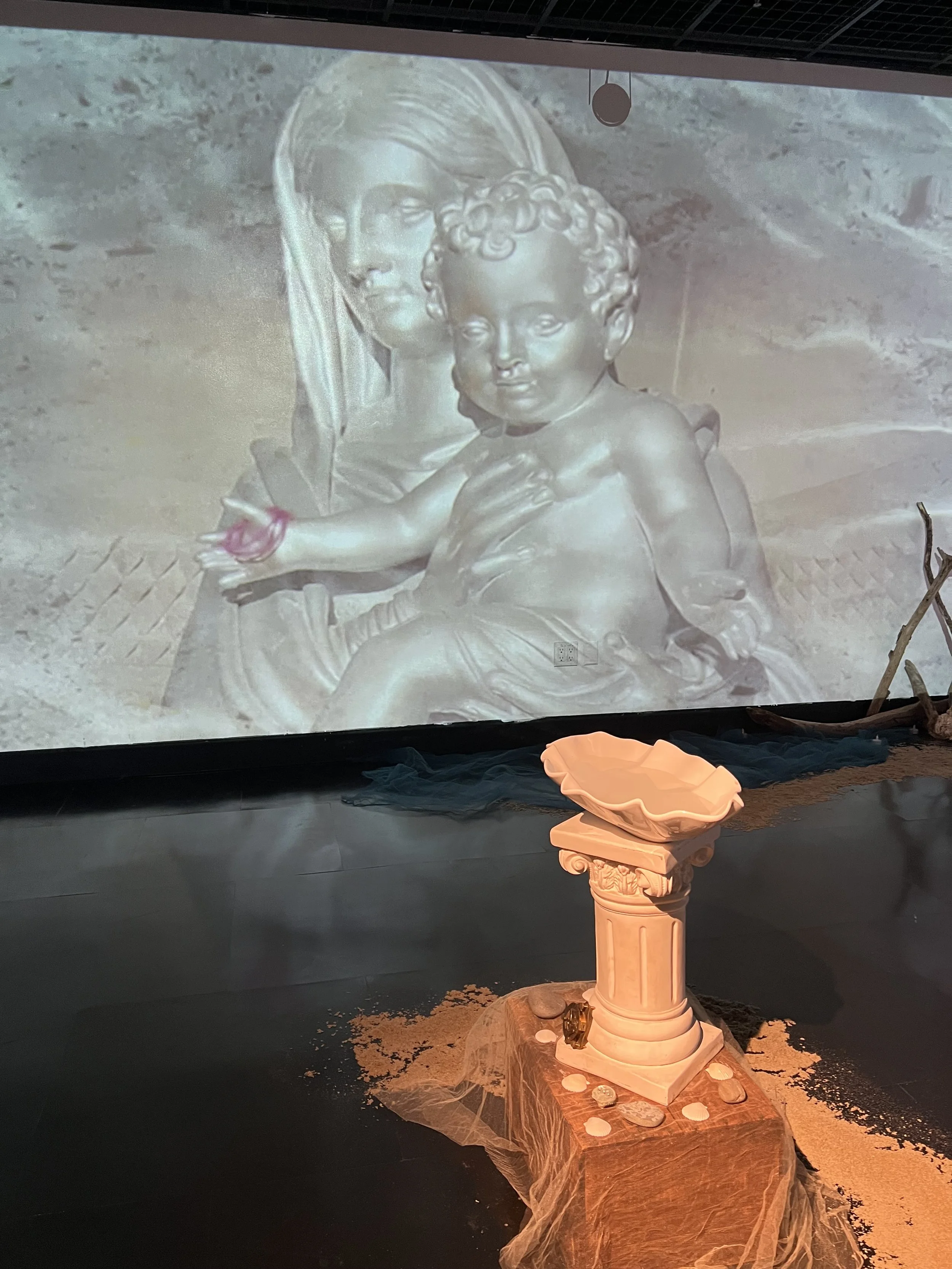
La Bonne Mer installation at the Wave Cave, CalArts, Los Angeles
What is your relationship to churches, sacred spaces, or spiritual traditions?
Alisha: My earliest artistic inspirations came from my Catholic upbringing. The motivation for attending mass was truthfully always more about the Gregorian chants, the opulence, and the ritual. It was a gateway to choir, classical singing, and my solo work. Personally, being able to separate the patriarchal elements from Catholicism and the church has allowed me to continue being inspired by the archetypes and aesthetics of it.
Katy: I am often the odd one with my friends out when we discuss our religious backgrounds and traditions, as I grew up so very very distanced from organized religion and church. I definitely am a bit wary of religion generally, when it is so often wielded as a weapon to justify destruction, to cherish sameness, or to measure some beings’ value higher than others. Besides that corrupt angle, though, I have grown to understand the deep belonging that can be offered by a church or any shared sacred space, and realized that I did have many similar arenas of belonging and belief, albeit nontraditional. My family celebrated pagan holidays with the wheel of the year (Solstice, Equinox, Yule/Secular-Christmas) and had lots of personal spiritual tradition built in. There was a point as a kid where I actually really wanted to “name” our “religion” and so my moms and I decided our witchcraft-adjacent practices could be summed-up as “Children of Mother Earth.” Very California Lesbian of us… Now, my ongoing, ever evolving relationship with my own mother-grief, and with my mother in spirit form makes my connection to a greater Mother Earth feel obvious and beautiful.
Margo: In general, I always had problems with the catholic church, feeling it as too invasive in people’s life choices, patriarchal, source of close mindedness and bad conservatism. As a young adolescent, I have been very angry, and in a way, I still am. What I find interesting with the theme of La Bonne Mer is that it gives me the chance of reflecting of the spiritual side of catholicism purely from a spiritual lens. I feel nature and a sacred space, I enjoy rituals that remind us where we come from (earth) and the part of religions that help us connect with this. Something we so often forget as human beings.
Do you see the sea itself as a sacred presence?
Katy: Yes, absolutely. All elements, plants, animals, feel sacred to me, and the sea - water itself - makes our existence on this earth possible. The power of water cannot be overstated, and I feel that power wash over me any time I am near the sea like this. From the depths of the ocean to the moon who controls her tides, there is presence and power and connection. While we were at île de Ratonneu I think we felt a very specific kind of energy. It was a calm, secluded inlet, and there was a nurturing feeling about the way the water behaved. Her presence was connected to the greater sea, but at the same time intimate and relaxed. It felt meditative to spend time with this energy and join in as a part of her nature.
Alisha: The sea, and water itself hold an incredibly sacred presence. Water is life-giving, healing, and incredibly powerful. It is a teacher of how to flow, surrender, and forgive. Getting to swim in the Mediterranean for the first time, and all together as a group while at île de Ratonneu was such a nourishing moment. It allowed for such a release after a very long period of grief for me. The warmth, the sun, the salt brought an incredible sense of presence and connection in that moment that I’ll never forget.
If the sea could speak through this work, what do you imagine it would want to tell us today?
Katy: Alisha recently was referencing a quote about the idea that water has agency, and we should treat it as such in our daily interactions with it. This is such a fundamentally different way of thinking about water that really blew my mind… I think the sea in our piece is exhibiting exactly that; it’s an exploration of the energy and power but also the intentionality and agency she is working through. I think the sea would want to be recognized for having a responsive and reactive relationship to all of us, already.
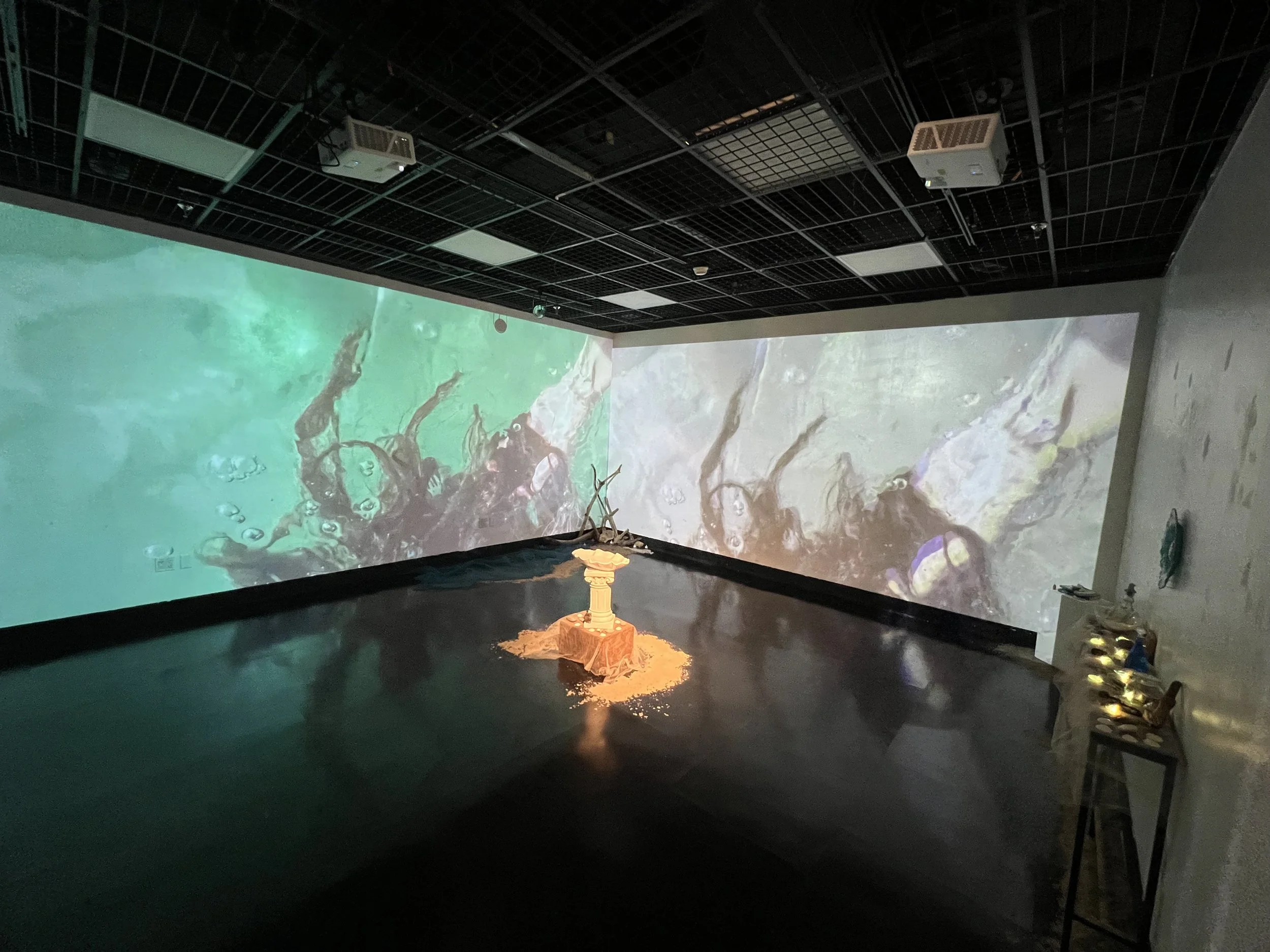
La Bonne Mer installation at the Wave Cave, CalArts, Los Angeles
Where do you see LA BONNE MER evolving next?
Alisha: It would be wonderful for all of us to be able to create an installation in Europe together! With all of us there, I imagine there could be many different live components.
Margo: Yes, Europe! :) And I would also like to try some live experiences. A performance maybe?
Could this project continue to transform through other landscapes or forms?
Alisha: Absolutely! Since Katy is a dancer, we’ve talked about incorporating a live movement component in the future. I think different environments can inspire this piece to be showcased in many different ways. It feels really open and exciting!
Katy: Yes, especially after seeing what was possible in the Wave Cave, there are so many more directions we could go to develop and expand this piece. It would be amazing to have us all in one place improvising live, or create a dance piece to perform along with the other aspects, or just build on the interactive/immersive elements like the sand and water on a different scale.
What feels sacred to you right now?
Alisha: The ritual of “practicing singing”. Singing is such a somatic experience, and leaning into practice as ritual has been an incredible way to go deeper in my work.
Margo: The time and energy and “space” of music
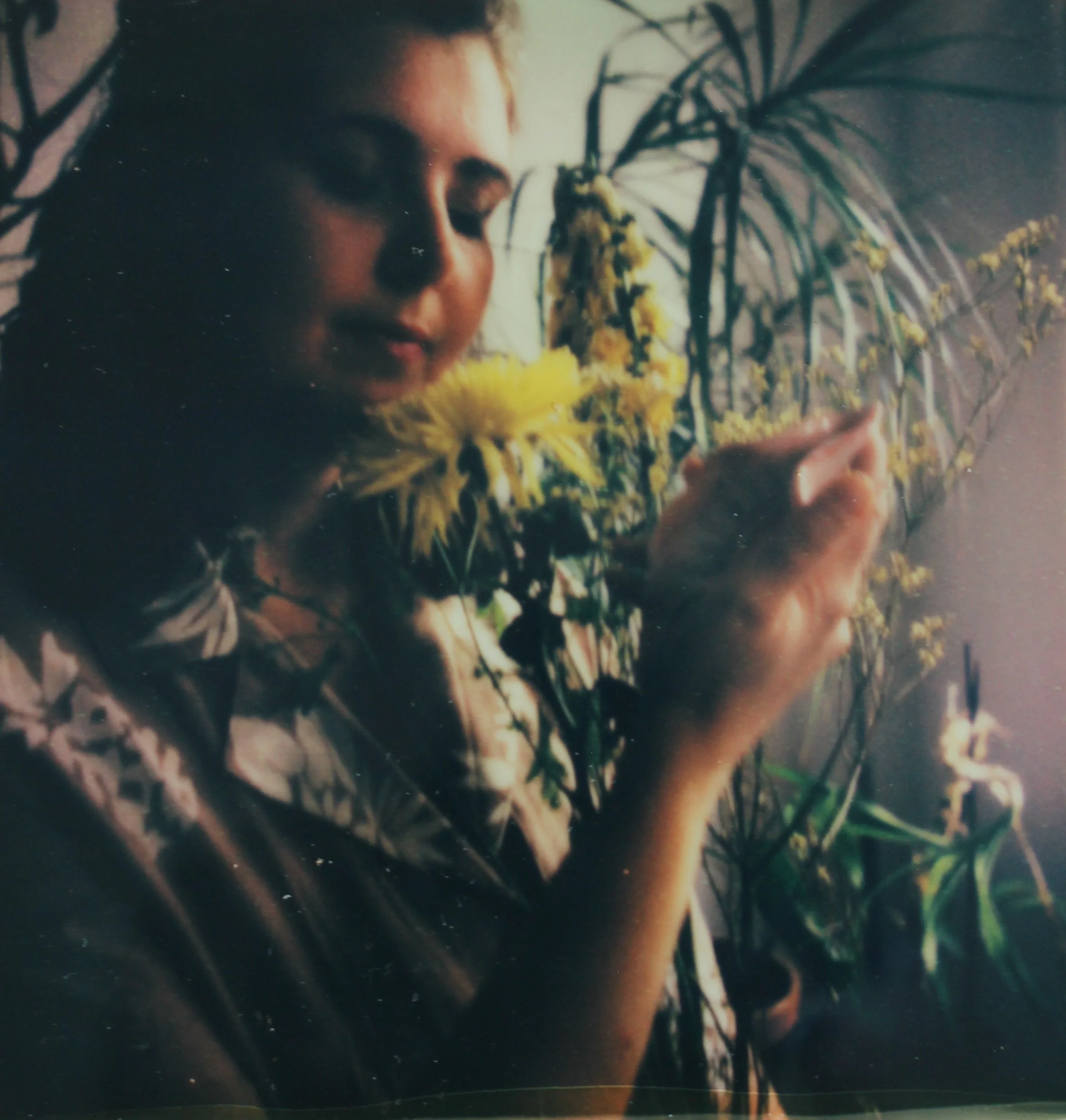
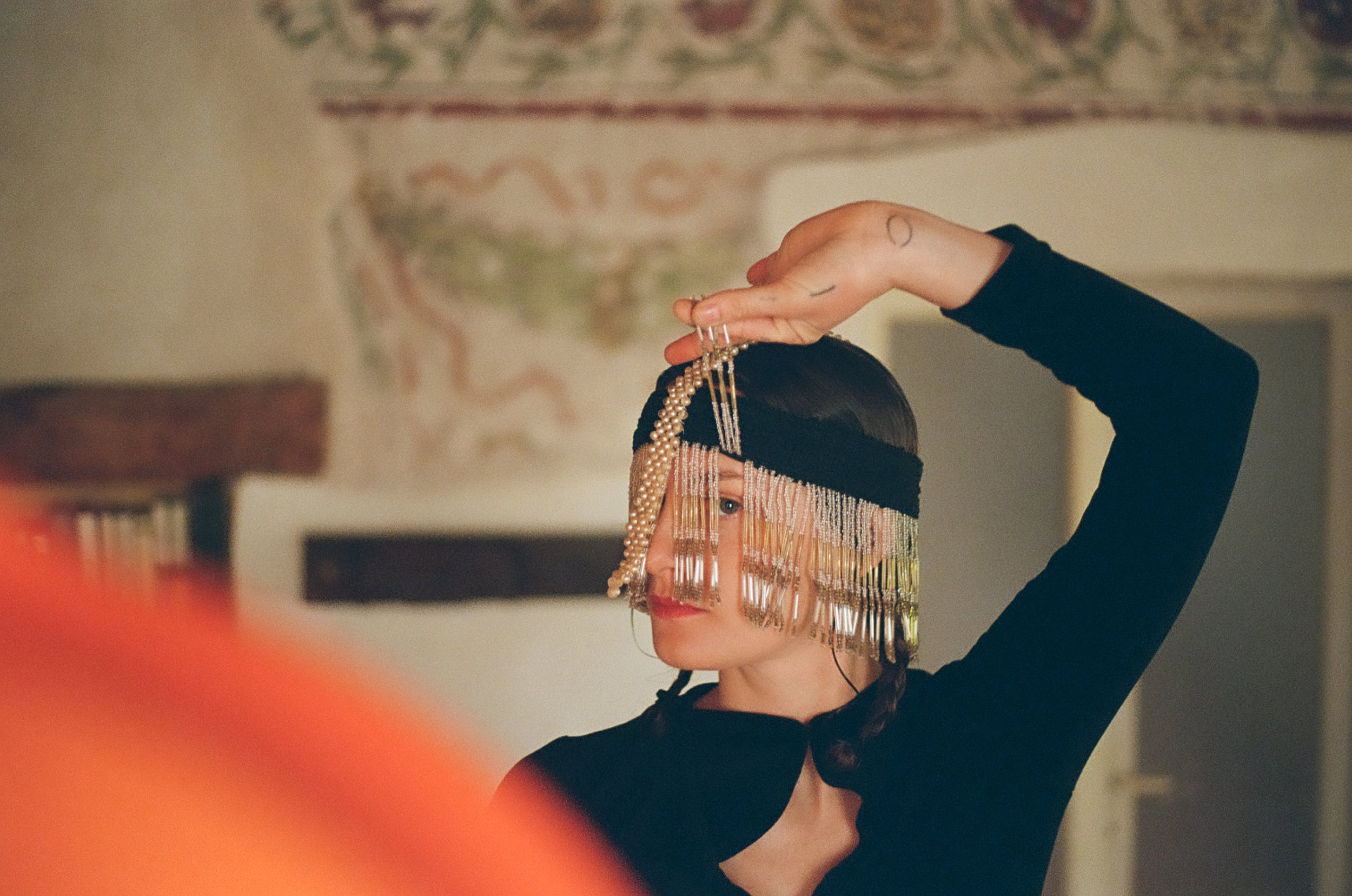
Wild Anima, photo: Effie Emmanouilidi
Previous works by the artists
“Hidden Eden” art film by Lush Agave & Wild Anima with Margo Sanda, Iceland 2018
Music videos
“Asturius” by Lush Agave, Florida 2018
“Harlot” by Lush Agave with Wild Anima, Iceland 2018
“My Earth is beating” by Wild Anima with Lush Agave and Margo Sanda, Iceland 2018
“Solo colpa mia” by Margo Sanda with Wild Anima, Berlin 2019
“Controllo” by Margo Sanda with Lush Agave, Joshua Tree 2020
About the artists:
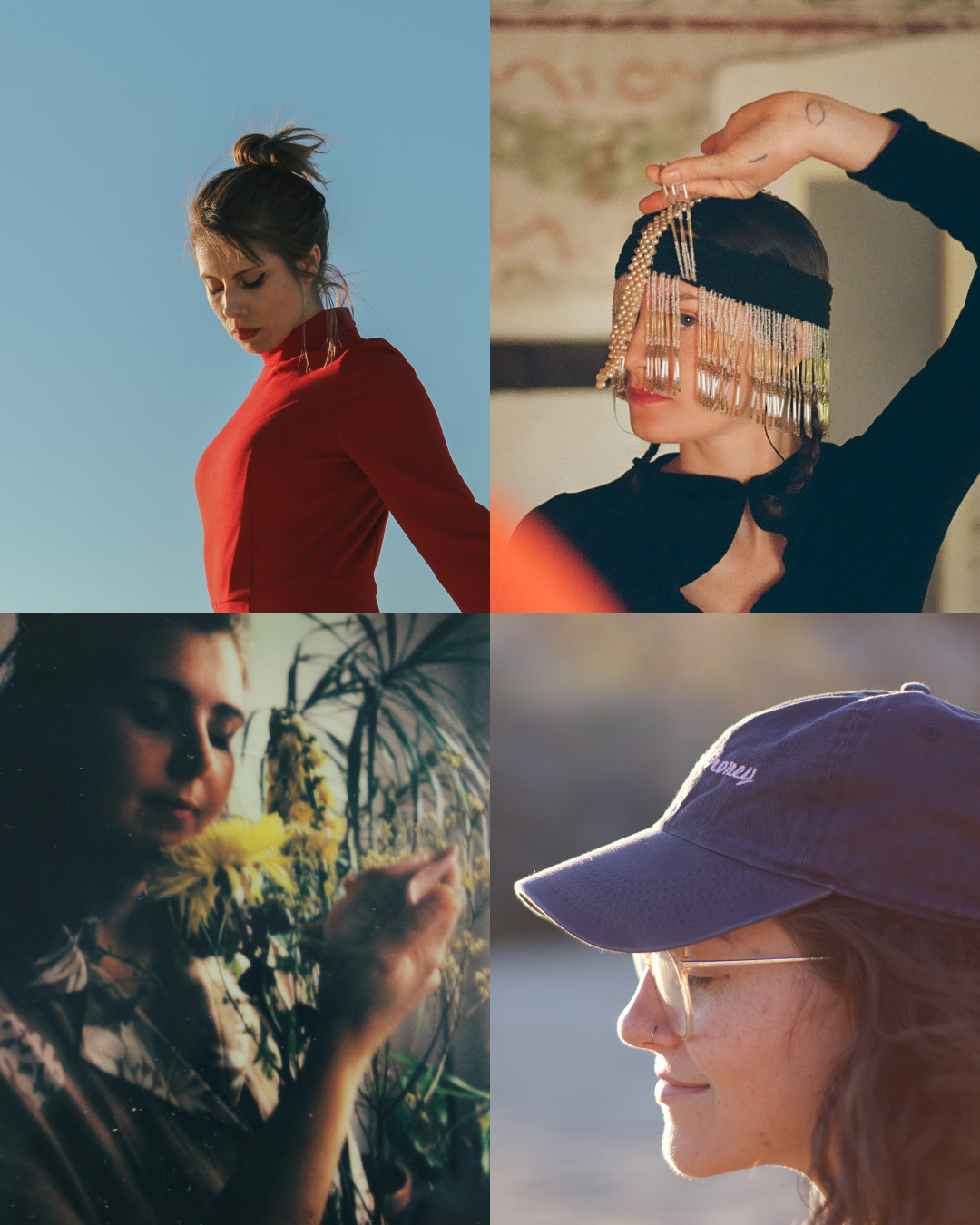
Alisha Torrealba Erao (Lush Agave), is a vocalist, producer, filmmaker, and educator based in Los Angeles. Much of her work involves reimagining classically structured work through new mediums. She is interested in authentic connection between performer and audience, and the human and non-human world, creating safe and vulnerable spaces wherein we are invited to discover with collective emotion and healing. Alisha received her Bachelor’s in Vocal Performance at the University of Central Florida, and is currently pursuing an MFA in the VoiceArts program at California Institute of the Arts (CalArts).
In collaboration with Alex Alexopoulos (Wild Anima, France), their latest works explore the concept of the Ecology of Emotion. Their creative and philosophical conversations around this topic have evolved into a framework for understanding the relationship between emotion and the natural world, as well as an embodied artistic practice rooted in listening, ritual, and ecological attunement. In looking to the earth as our mirror for how we feel and create, the earth becomes our mentor and co-creator.
Alisha and Alex are joined in collaboration for this project with Margo Sanda (Italy), a music creator, performer and multimedia artist working in the realms of experimental art-pop and free improvisation. Margo recently graduated from Conservatorio Luca Marenzio Brescia (IT) with a Bachelor in Popular Music Composition and spent a year exchange at the Rytmisk Musikkonservatorium in Copenhagen (DK).
Katy Corbus (Los Angeles) as the final member of the creative team, is a musician, dancer, and aerialist. A second-generation queer artist and interdisciplinary practitioner, she is passionate about the interconnectedness of art, family, and community. She has taught creators of all ages across the performing arts, and cherishes time spent on collaborative projects like this one. Katy holds a BFA in Musical Theatre from Emerson College.