Version Française clichez ICI
Sacred Sea - Artist interview
Exhibition Faussement Anodines by Iris Le Fur — Sound artist, PhD in Sound Arts
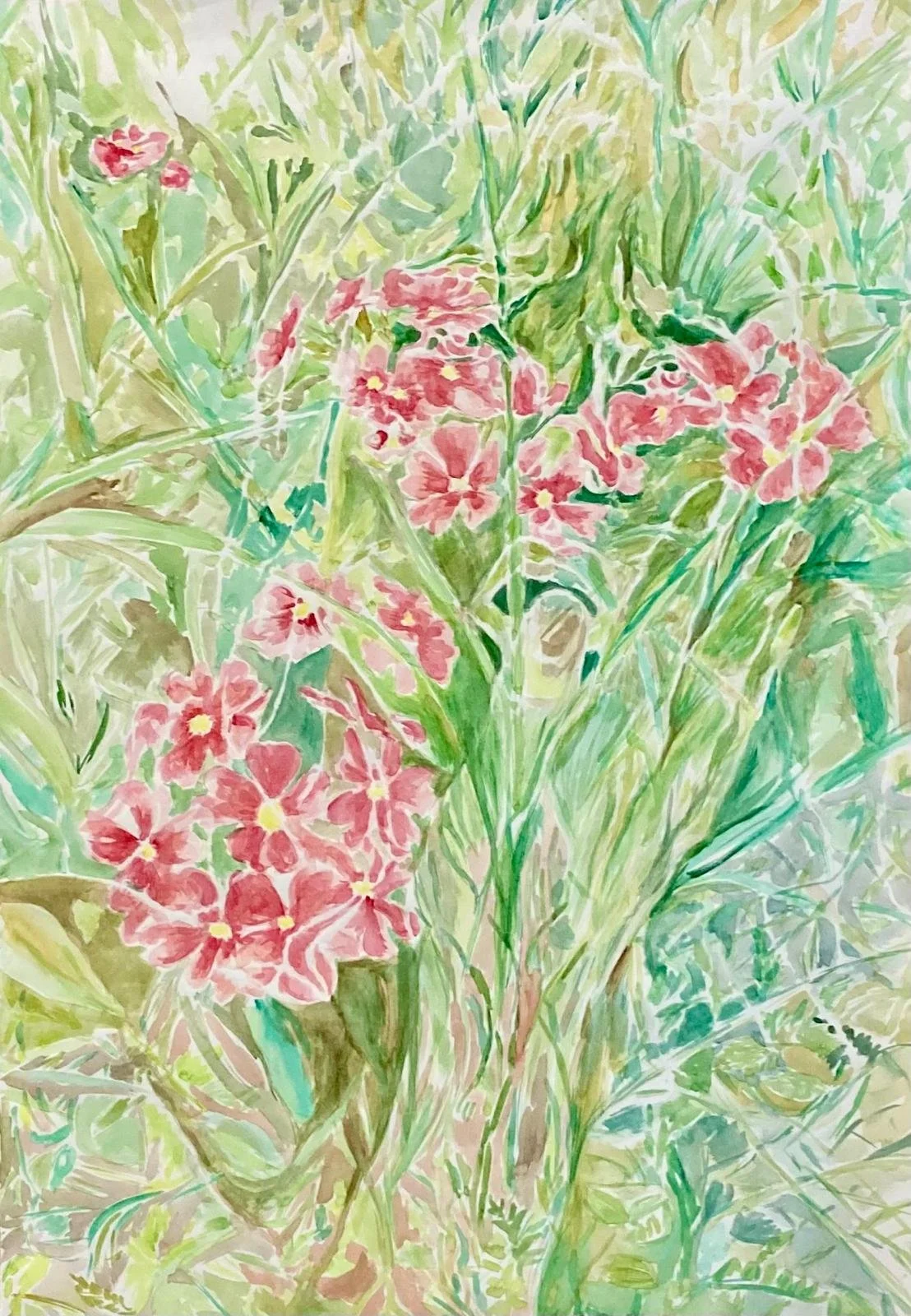
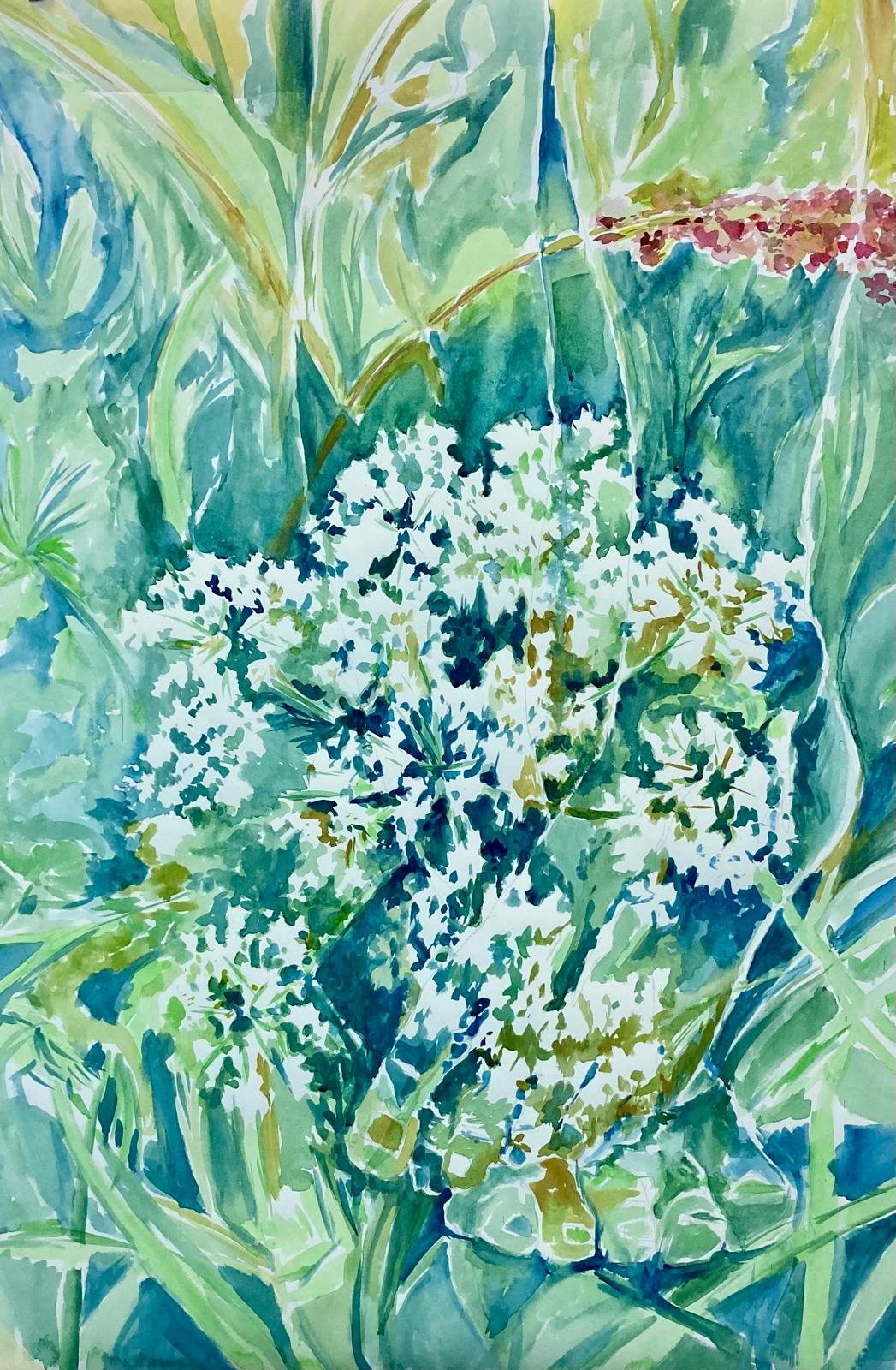
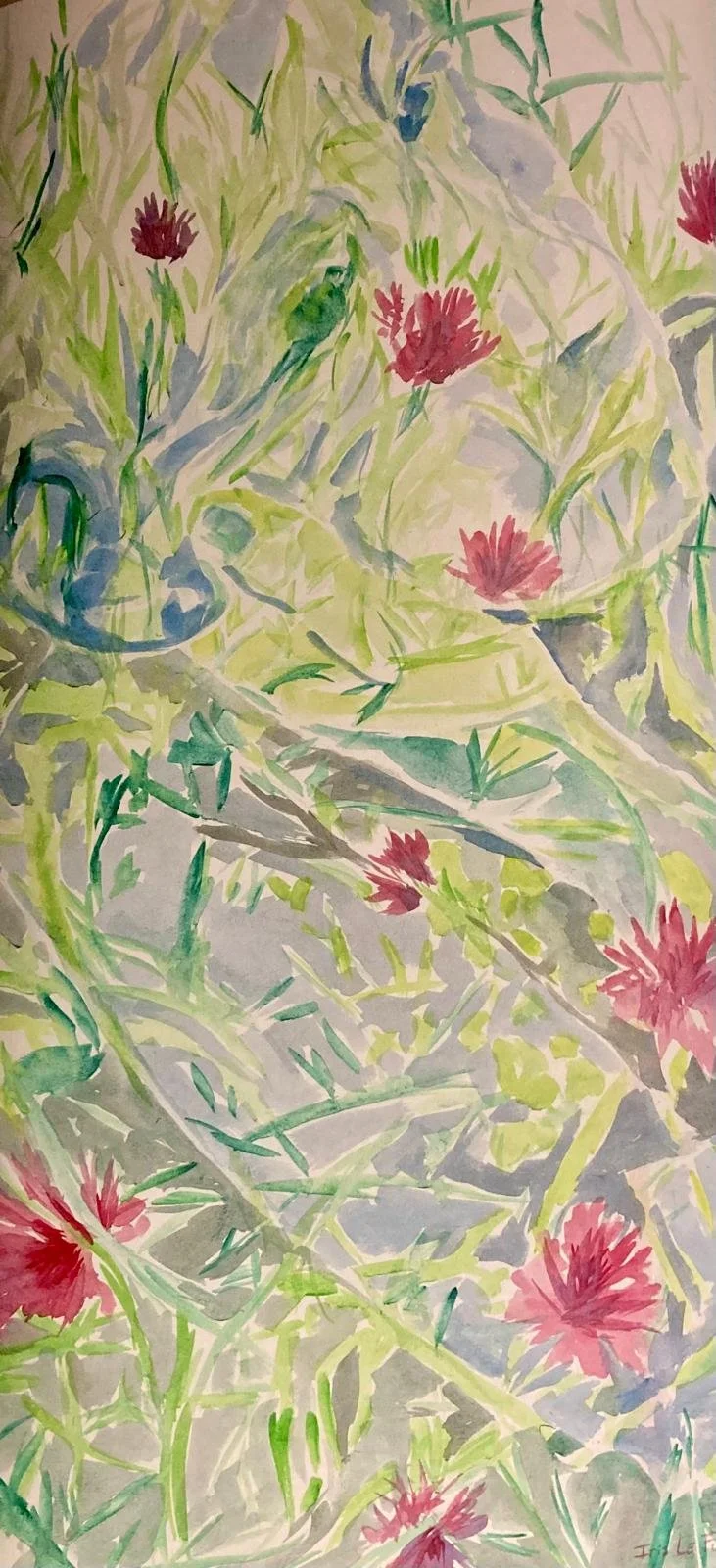
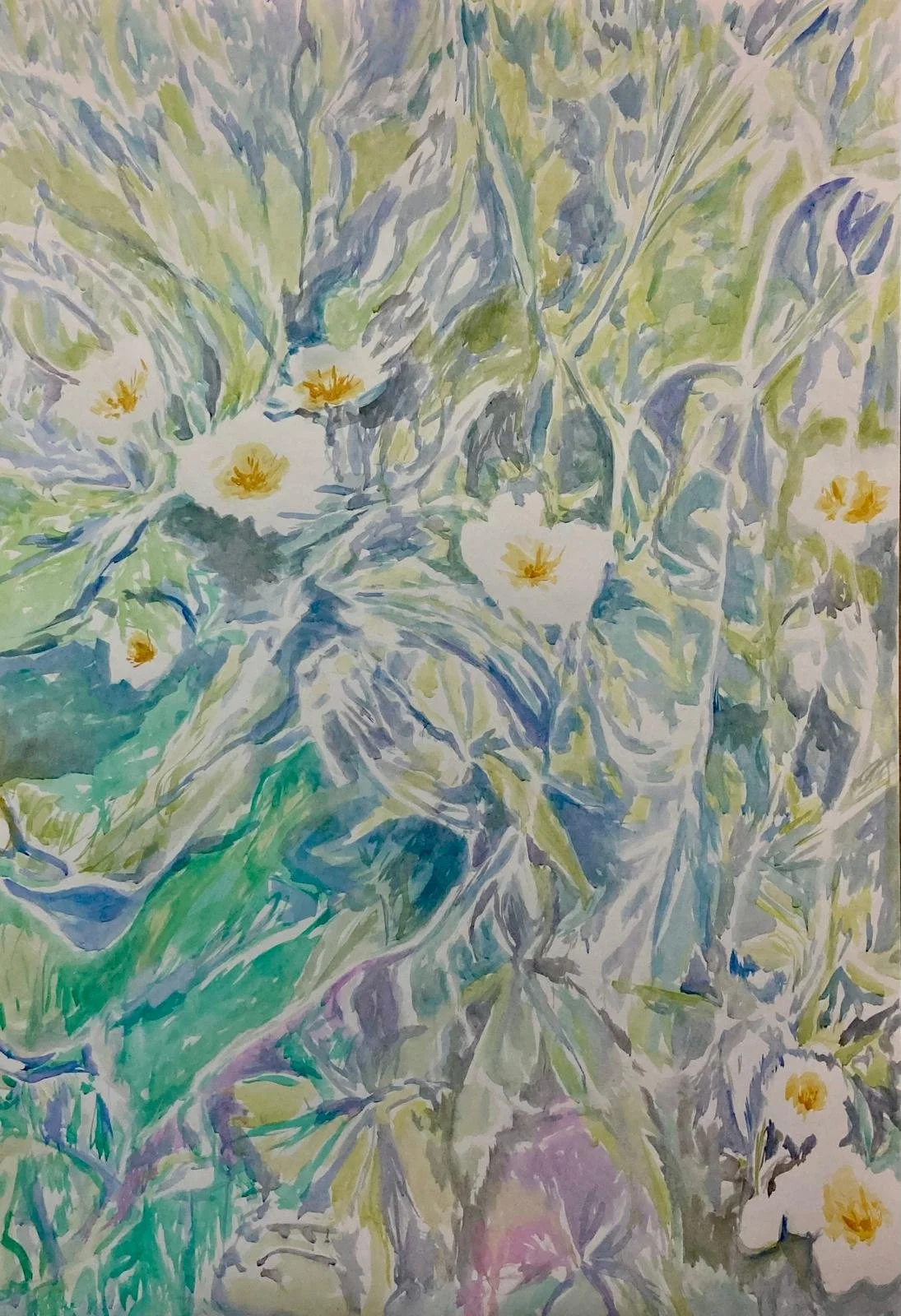
The exhibition Faussement Anodines, developed between 2023 and 2025, presents a series of watercolors on paper in varying formats, reinterpreting the flora found along mountain paths in the landscapes of Savoie, near the Italian border, in the heights above Bourg-Saint-Maurice (between 2,300 and 3,000 meters), as well as in the hills of Saint-Rémy-de-Provence.
The mountain ranges were explored by Iris Le Fur between July and September — the only months during which they are accessible and free of snow. The hills were traversed the following spring, in rhythm with the grazing routes of sheep herds.
Through a practice combining photography, field recordings, sound composition, sketches, and watercolor, the artist conducted a meticulous yet deeply emotional mapping of these environments. This project unfolded alongside a parallel exploration of femininity and intimacy, leading to a body of visual work that invites a dual reading.
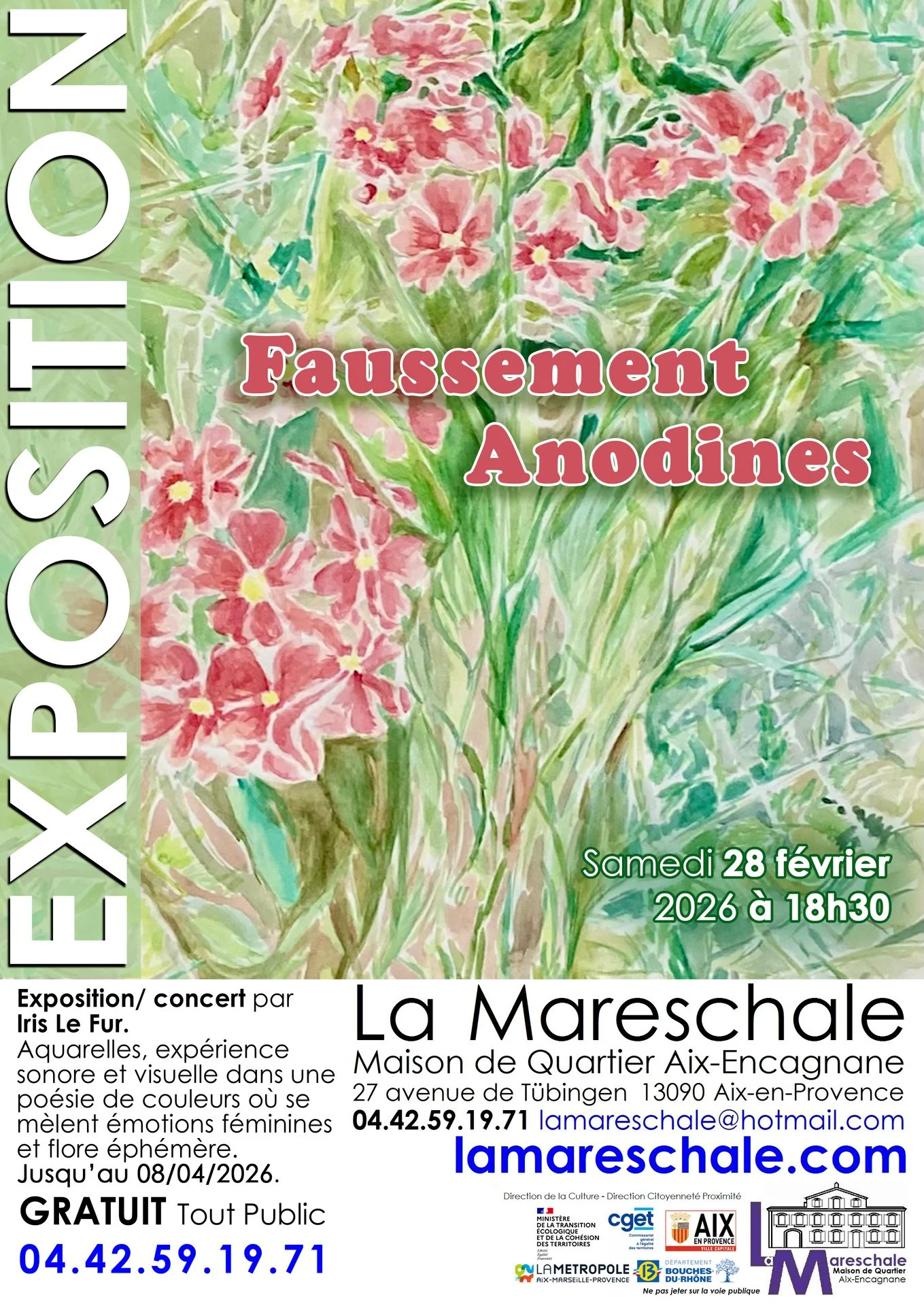
The exhibition is on view until April 8, 2026 at La Mareschale à Aix-en-Provence.
How would you describe yourself as an artist?
Iris Le Fur: I would describe myself as someone fully immersed in my creative process, constantly navigating a multitude of ideas every second, and whose main goal is above all the joy of sharing with the different artists I collaborate with. I always say that if we’re enjoying ourselves, the audience will be there too!
Can you tell us about this series of works you are exhibiting, and what lies behind the title?
Iris Le Fur : This series of works for the exhibition Faussement Anodines is a body of work I began in 2023, which has already been shown at the gallery Pail Chez Anne in L’Estaque.
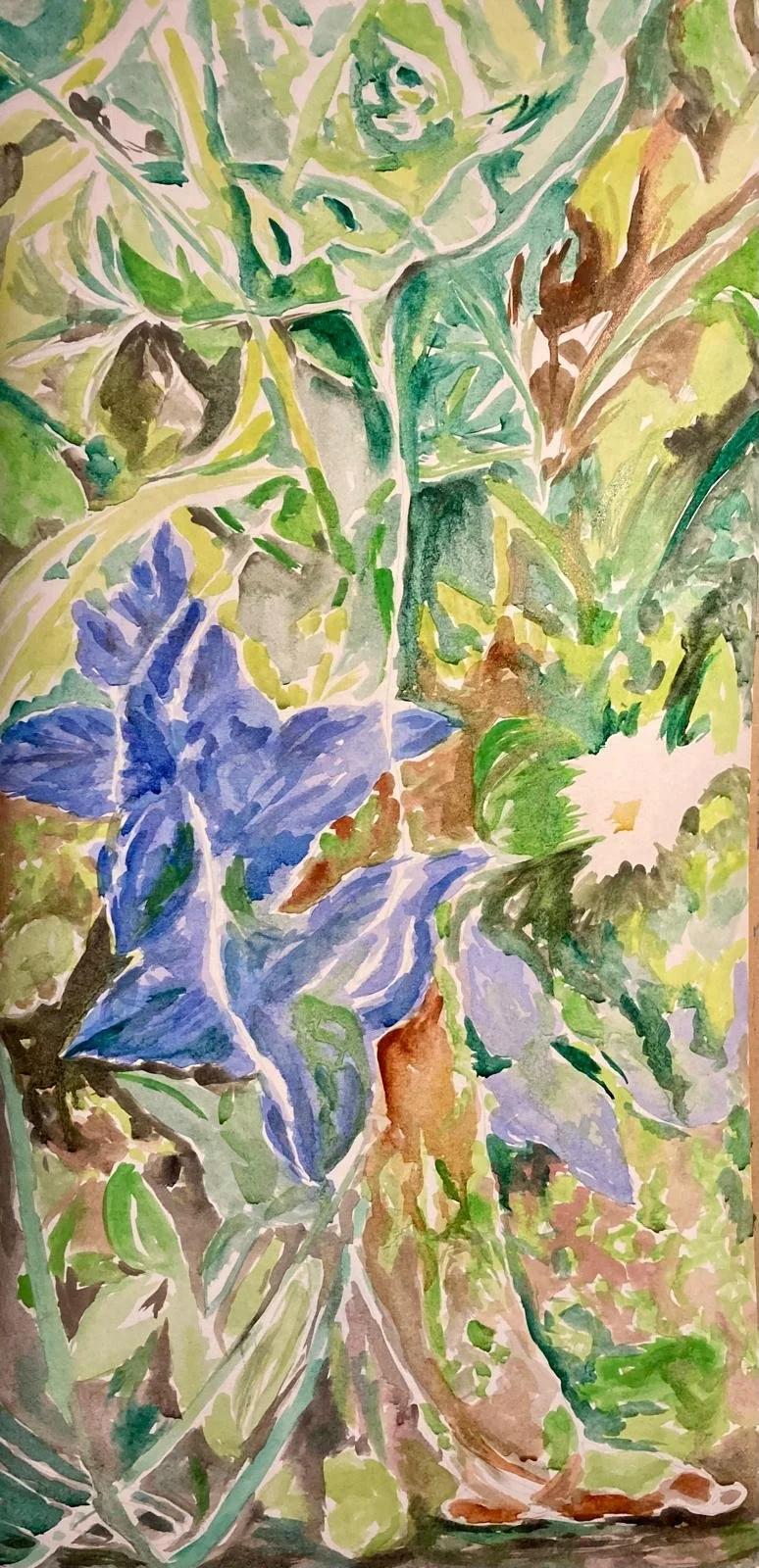
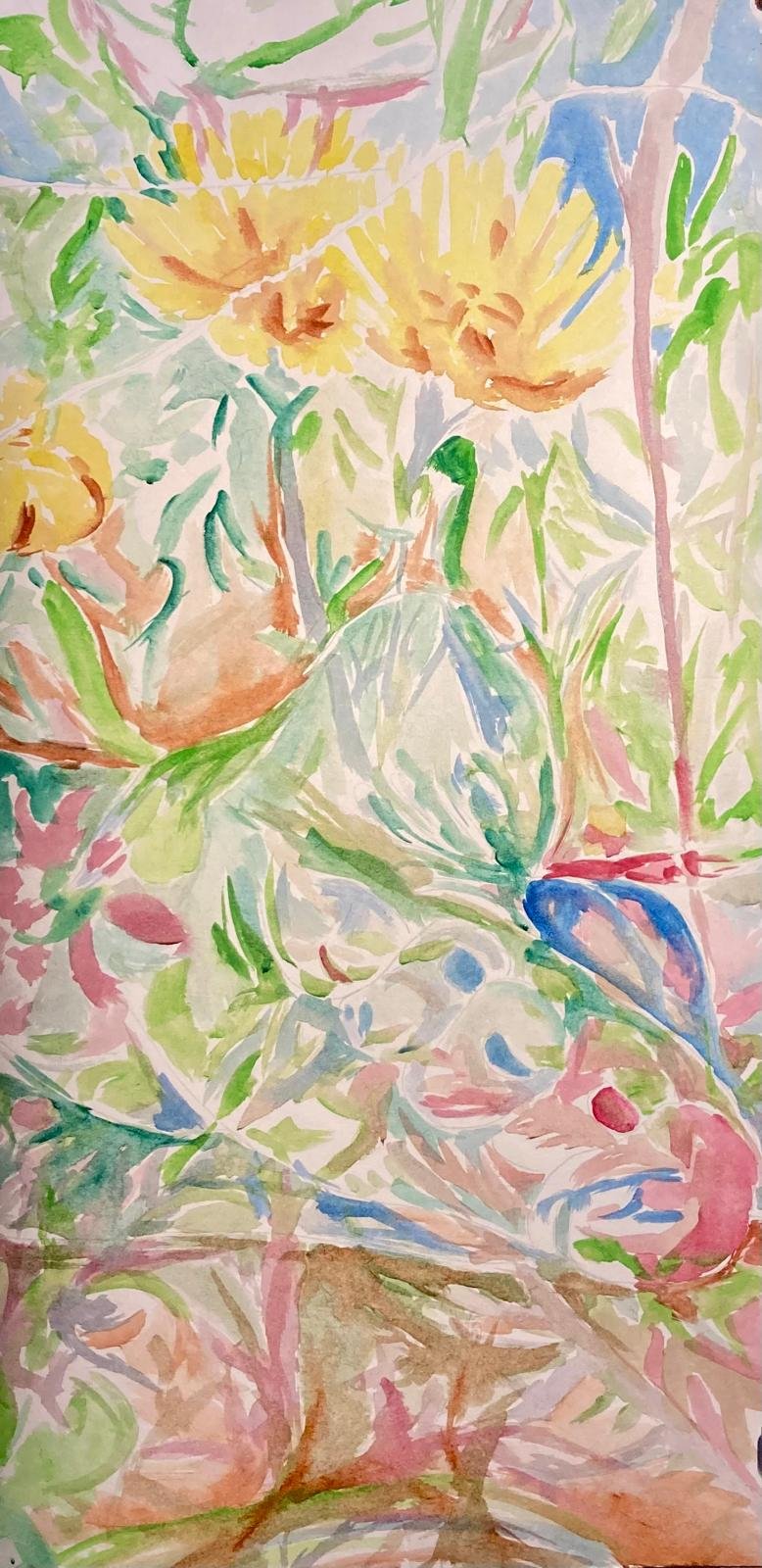
I felt a strong desire to continue developing it — a series of large-scale watercolors depicting, at first glance, wildflowers found along the edges of paths, and in reserve, female bodies.
The “reserve” refers to the areas of the paper left untouched by watercolor — the white spaces where the contours of feet, shoulders, hands, or faces quietly emerge. Through this, I attempt to give a visual form to feminine thoughts: those small inner dialogues, the silent conversations we have with ourselves, unfolding in intimate moments and forming the ground of our inner life and femininity.
Between fragility and Amazon-like strength, a multitude of contrasts reveals itself in these in-between spaces within oneself — something I try to capture through stains and flows of color.
I chose these roadside flowers because, much like these thoughts, they may seem insignificant or without purpose, yet they are essential to a larger balance.
What is your creative process in general? What place do you give to intuition within it?
Iris Le Fur : For this project, I had complete freedom, and it was while walking through the different landscapes I explore alongside my partner, who is a shepherd, that I encountered this idea of roadside flowers. Fragile, simple, yet at the same time strikingly beautiful, I began to connect them with feminine thoughts — a line of exploration that has been part of my practice for several years.
Once there is an initial intuition, the real challenge is finding how to translate that first sensation into a visual form. A kind of emotional archaeology begins to unfold through photography, note-taking, sketching, sound compositions, and poetry. There is a whole weaving together of materials and emotions that needs to be brought into coherence. It often simmers for a while—then suddenly, a balance takes shape.
There is a kind of evidence that appears, something that must be captured and stabilized. Once I find a way to translate this multiplicity of emotions and thoughts, I enter a phase of intense production, where I seek to constantly renew my visual language. I must never fall into a fixed or repetitive “system.”
It was the artist François Aubrun who explained this idea to me when I had the chance to visit his studio in Aix-en-Provence. “Never fall into a system,” he told me.
So I don’t believe there is ever just one good idea. Instead, there is a succession of thoughts that cyclically challenge my work, allowing each piece to retain its freshness. A watercolor is a singular emotion—something you almost grasp with your fingertips, an evidence that both reveals itself and slips away at the same time.
How do your visual and sonic practices feed into one another? Do you “paint as you listen” or “compose as you see”?
Iris Le Fur : My visual and sonic work are in constant interaction — it’s a synesthetic way of thinking. When I play sounds, images, forms, and colors immediately arise, and vice versa.
When I paint, sounds and rhythms are already present in my mind. Everything exists in a state of continuous correspondence. It took time to develop a working practice that allows me to move fluidly between visual and sonic creation.
I’ve arranged my studio so that everything coexists: painting and drawing materials, sculpting tools, plant-based paper, alongside my musical instruments — piano, harp, percussion, flutes, and of course the violin. Everything needs to be within reach, so that at the precise moment I need it, there are as few practical constraints as possible, leaving space for the thought as it emerges.
Is sound present in the exhibition, or is it suggested through the images?
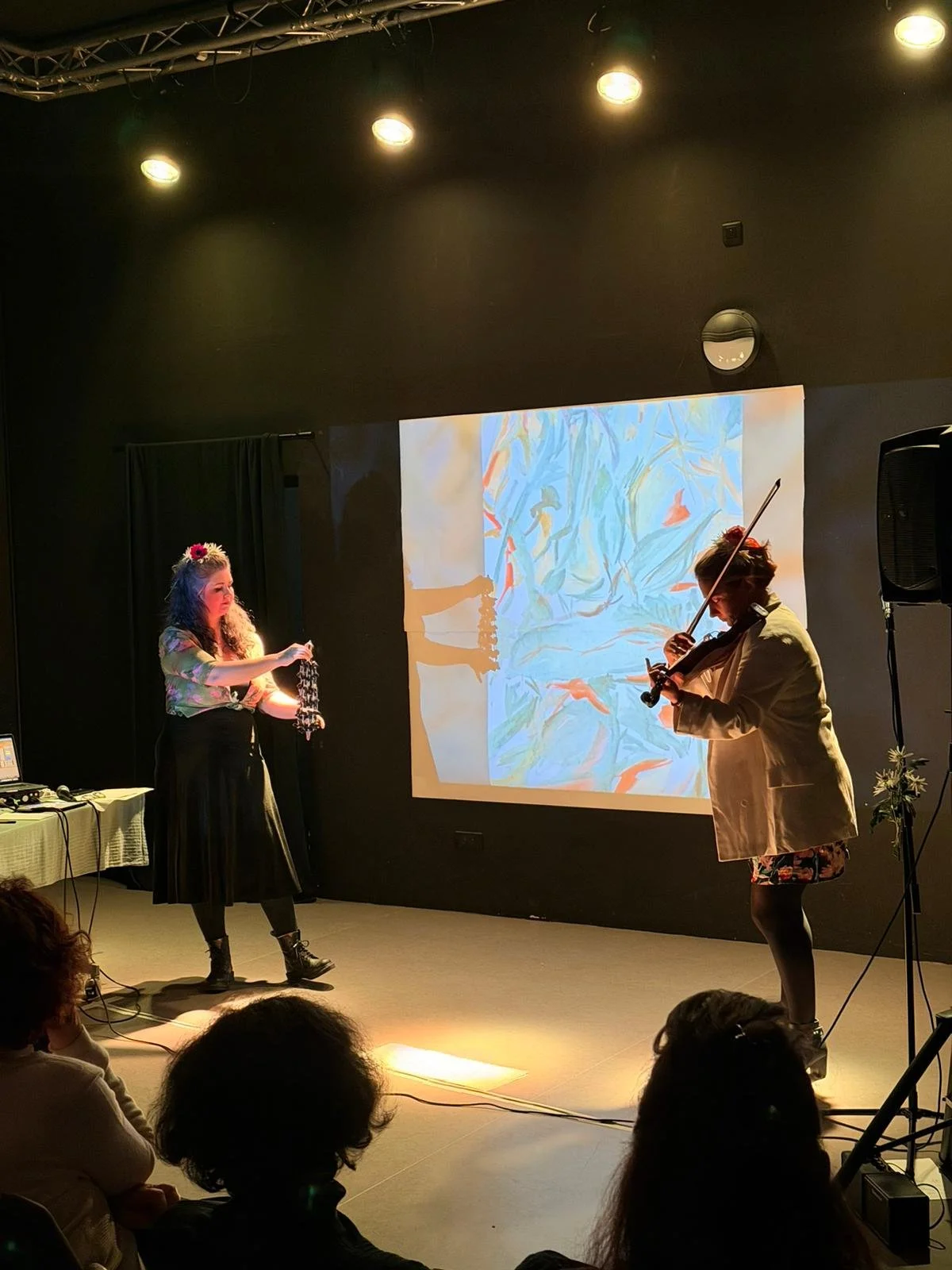
Iris Le Fur : All of the sound compositions are designed to be experienced simultaneously with the watercolors. For each opening, I also present a live concert where the pieces are performed in real time.
My work is created to explore the interaction between our visual and auditory perceptions. What we see influences what we hear, and vice versa. It is this back-and-forth that I investigate in my practice: how images unfold within our minds through sound, and how sounds come into a unique harmony with the forms and colors before us.
What kind of relationship do you seek to create between the different works?
Iris Le Fur : The different watercolors can be read in any order, depending on each one of them. The juxtaposition of these thoughts and sensory perceptions creates an atmosphere in which the audience can immerse themselves.
What place does the body (yours or the viewer’s) hold in your work?
Iris Le Fur : The body is the ground of our sensations. It is, of course, my primary way of experiencing the world and my relationship to it. My experience is personal, but the challenge in my work is to move through these intimate dimensions toward something more universal.
My aim is to weave connections that can resonate with everyone. My body allows me to sense what feels important to bring into the light — what may seem insignificant, yet touches something essential.
In my work, whether it is my own body or that of models, the body is above all an emotional vector. The different postures, the way the body positions itself, allow me to create a language that translates my thoughts. It is a language.
In this way, the suggested positions enter into dialogue with each viewer’s own relationship to their body and their personal history.
Do you seek to translate something invisible?
Iris Le Fur : Obviously, the invisible is what fascinates me the most. Often, what is hidden is the essential. It is right there before our eyes at every moment, yet our attention avoids it. It is when the evident meets the unexpected that my focus sharpens, signaling that this is the space of something particularly interesting.
Which influences, artistic or otherwise, nourish your work?
Iris Le Fur : I greatly admire the work of the Egyptian visual artist Ghana Amer, who explores weaving practices while interrogating female sexuality. The sound artist Zimoun also profoundly resonates with me.
Are there particular places, memories, or states that have an impact on you?
Iris Le Fur : I am deeply moved by the landscapes I encounter when I have the chance to follow my partner through the hills of the Albilles, in Savoie or Haute-Savoie. I particularly love that state of being — that letting go.
What feels “alive” or in motion in your practice today?
Iris Le Fur : Above all, what is alive is my thought!
In connection with International Women’s Day, which women — artists, ancestors, visible or invisible figures — accompany you in your work?
Iris Le Fur : There are so many exceptional women artists! I would mention Elisabeth Jacquet de la Guerre, a great French composer for the harpsichord and the first woman to compose an opera in France. But also Nina Simone, Vigée Le Brun, Sonia Delaunay, Etta James, France Gall, Anne Sylvestre, Michèle Sylvander — and many others!
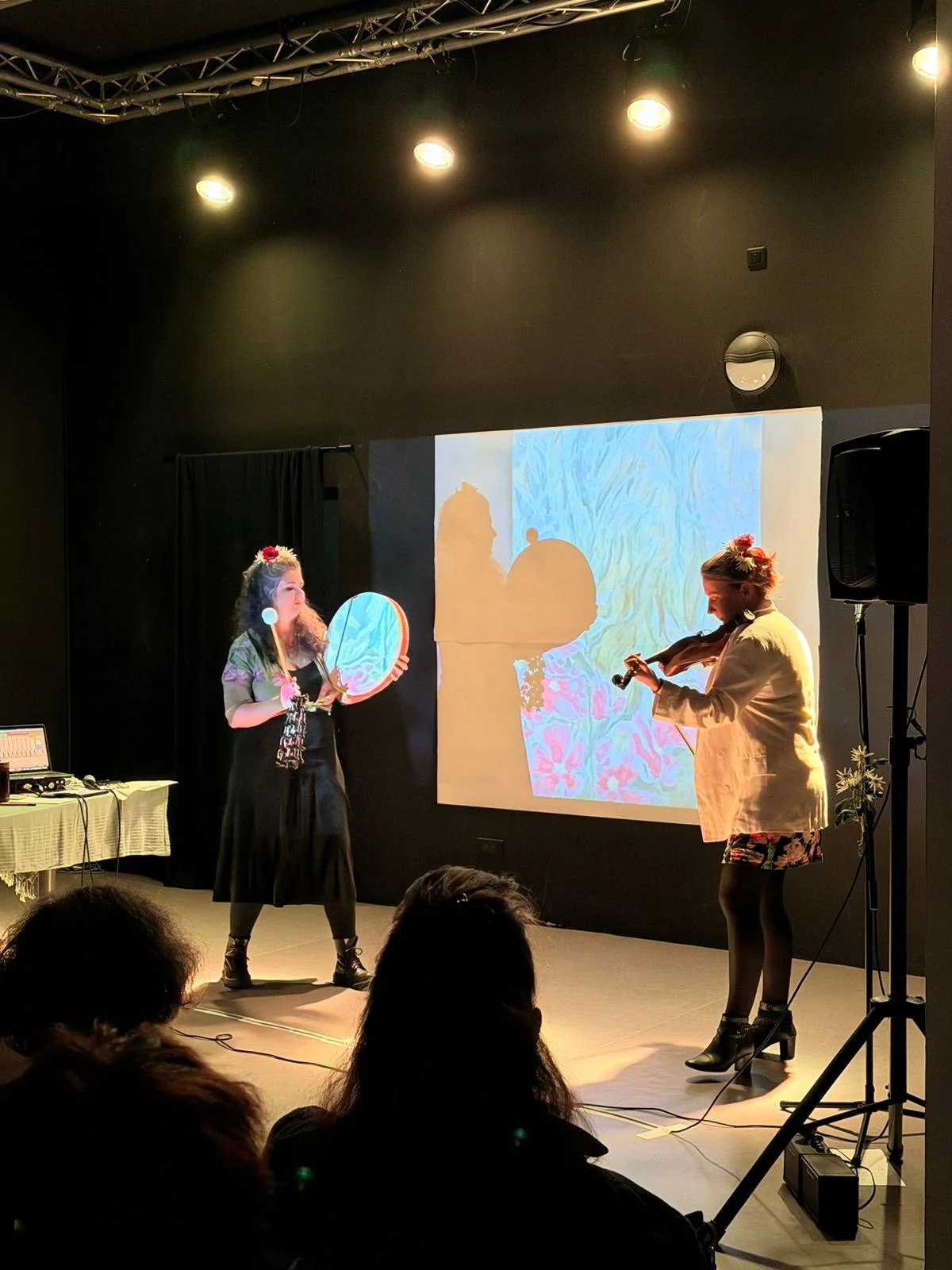
Iris Le Fur en live avec l’artiste Wild Anima, concert vernissage “Faussement Anodines”
À propos de l'artiste :
“I create the way I walk along paths.”
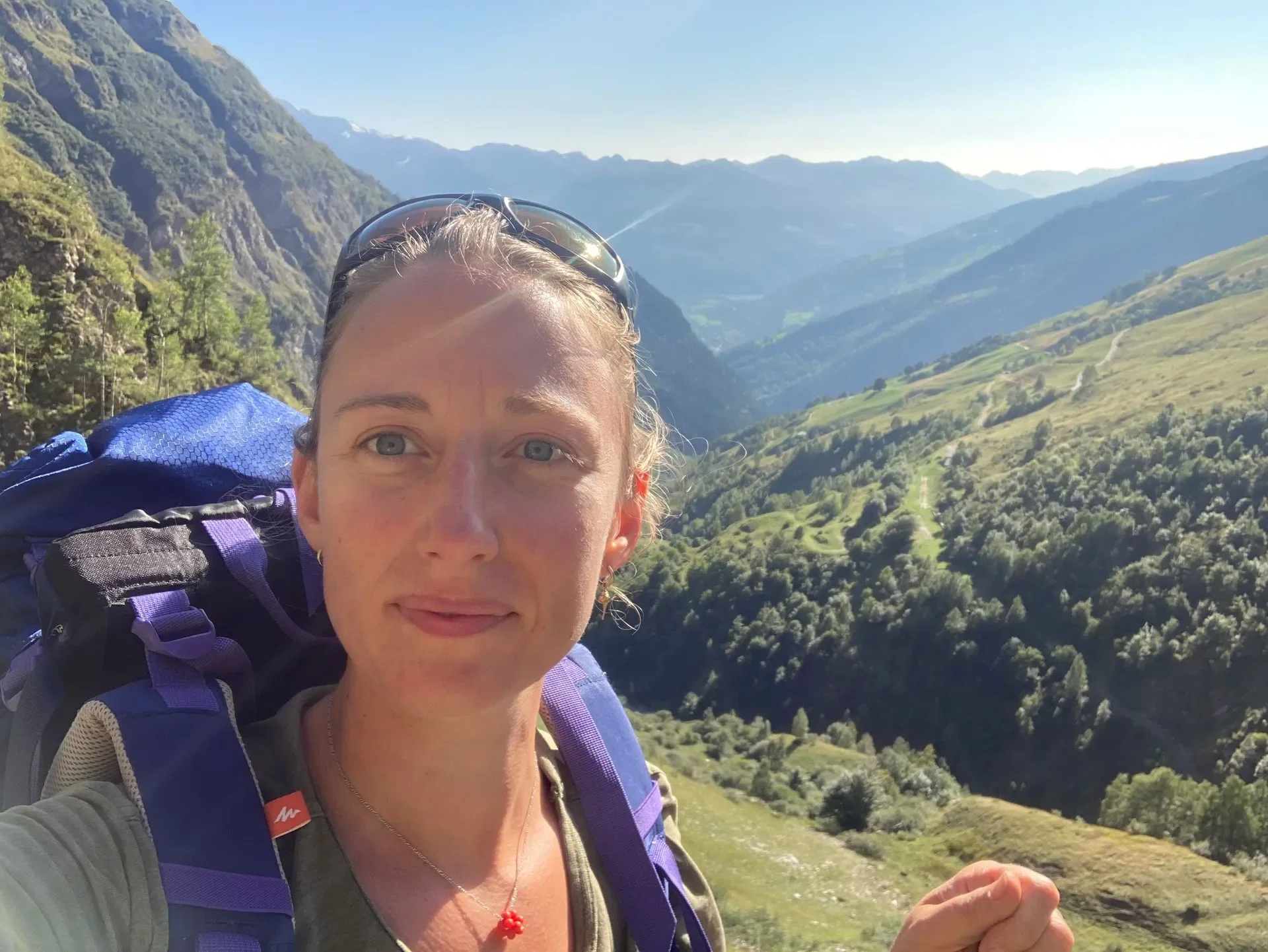
Iris Le Fur is a sound and visual artist who explores the interactions between visual and auditory perception through a multidisciplinary practice.
Her research as a PhD in Sound Arts within the CRILLASH allows her to engage with other artists and to analyze emerging forms of contemporary artistic practices.
CRILLASHE : Centre de Recherche Interdisciplinaire en Lettres, Langues, Arts et Sciences Humaines
Site Web d’iris: https://www.irislefur.com